


Finding the right addiction treatment center in Lake Worth, Florida is one of the most consequential decisions you or someone you love will make, and the landscape of options is complex enough that going in without a clear framework puts you at a serious disadvantage. This guide walks through what actually separates effective programs from ineffective ones, how to evaluate clinical quality, and what to ask before you sign anything.
What makes an addiction treatment center worth choosing
A 2022 SAMHSA report analyzing data from over 49,000 treatment facilities found that fewer than 40% of adults who need substance use treatment actually receive it, and among those who do, outcomes vary dramatically based on program quality. The difference between a center that changes someone’s life and one that wastes six weeks of their time comes down to a handful of non-negotiable factors: accreditation, evidence-based clinical protocols, credentialed staff, and a plan for what happens after discharge.
Accreditation from the Joint Commission or CARF (Commission on Accreditation of Rehabilitation Facilities) is the floor, not the ceiling. Without it, there is no external verification that the program meets any clinical standard at all. Staff credentials matter equally, and they should be visible and verifiable, meaning licensed clinical social workers, licensed mental health counselors, and board-certified addiction psychiatrists rather than unlicensed “coaches” with personal recovery stories.
Before calling any facility, confirm one thing: ask whether the program is Joint Commission or CARF accredited and request the accreditation number. Any legitimate center will give you that information in sixty seconds. If they can’t or won’t, move on.
The types of addiction treatment programs available in lake worth
A 2019 study published in the Journal of Substance Abuse Treatment followed 1,236 adults across multiple levels of care and found that patients who completed a full step-down continuum, meaning detox into residential into PHP into IOP, had significantly higher 12-month sobriety rates than those who exited treatment early or skipped levels. Understanding the continuum is how you know where you need to start and where you need to finish.
For men in Palm Beach County dealing with moderate-to-severe addiction, the full continuum often begins with medical detox and moves through residential care before stepping down to less intensive outpatient support. The level that fits your situation depends on how physically dependent your body has become, whether co-occurring mental health conditions are present, and how stable your home environment is. If your home environment is part of the problem, a structured residential setting in Lake Worth or the broader Palm Beach County treatment corridor gives you a geographic and psychological break from old patterns.
Medical detox: the first and most critical step
The American Society of Addiction Medicine (ASAM) has published clinical guidance noting that withdrawal from alcohol can cause seizures in 5-10% of dependent drinkers, and that benzodiazepine withdrawal carries mortality risk comparable to alcohol withdrawal when unmanaged. Opioid withdrawal, while rarely fatal on its own, carries significant relapse and overdose risk when someone in acute withdrawal seeks relief outside a clinical setting.
What medically supervised detox looks like in practice: nurses and physicians monitoring vitals around the clock, FDA-approved medications to manage withdrawal symptoms and prevent medical emergencies, and psychiatric support available for the anxiety and depression that almost always emerge in the first 72 hours. This is not something that can be approximated at home or at a facility that only has nursing staff on call rather than on site.
When you call an admissions coordinator, ask this directly: “Do you have medical staff physically present in the facility 24 hours a day during detox, or are they on call?” On-site 24/7 medical coverage is the only acceptable answer for anyone withdrawing from alcohol, benzodiazepines, or opioids.
Residential inpatient treatment
A 2018 analysis from the National Institute on Drug Abuse (NIDA) reviewed outcomes across more than 10,000 residential treatment episodes and found a clear relationship between length of stay and sustained recovery: 90-day programs produced substantially better one-year outcomes than 30-day programs, with the 60-90 day range representing the threshold at which the brain’s stress-response and reward systems begin to stabilize.
Residential treatment provides something that outpatient cannot: total environmental structure. A quality residential program delivers a minimum of four to six clinical hours per day, including individual therapy, group therapy, and psychiatric support, alongside peer community, physical programming, and structured downtime. For men coming out of years of heavy use, the routine itself is therapeutic.
Insist on a minimum of 60 days in residential if the clinical assessment supports it, and be skeptical of any program that pushes 28-day stays as the default without a clinical rationale. The 28-day model was built around insurance billing cycles, not neuroscience.
PHP and IOP: stepping down without losing ground
A 2020 study in Drug and Alcohol Dependence tracked 412 patients who completed residential treatment. Those who transitioned directly to partial hospitalization or intensive outpatient had a 34% lower relapse rate at six months compared to those who discharged to standard outpatient or no care at all. PHP and IOP are not lesser versions of treatment; they are where the skills developed in residential get tested against real life.
PHP (partial hospitalization) typically runs five to six hours per day, five days a week, with the client returning to a sober living environment each evening. IOP drops that to three hours per day, three to four days per week. Both should include individual therapy, not just group sessions.
Before enrolling in any PHP or IOP program, ask: “How many hours per week of individual therapy does a client receive at this level of care?” If the answer is fewer than two, the program is largely group-based and may lack the clinical depth to sustain recovery during the most vulnerable transition period.
Co-occurring mental health conditions: why dual diagnosis treatment matters
SAMHSA’s 2022 National Survey on Drug Use and Health, which included data from approximately 70,000 individuals, found that 17.3 million adults had both a substance use disorder and a co-occurring mental health condition in the past year. Among men, untreated depression, anxiety, PTSD, and trauma histories are among the most common drivers of addiction and the most common causes of relapse after treatment.
Dual diagnosis treatment means integrated care, not two separate programs running in parallel. Integrated care means the psychiatrist treating your depression is talking to the therapist treating your trauma, and both are talking to the counselor managing your substance use programming. Anything short of that is incomplete.
Before enrolling, confirm this: ask whether the facility has a licensed psychiatrist on staff (not just on referral) who conducts ongoing medication management throughout treatment. A facility that only does an initial psychiatric evaluation and then hands medication management to a primary care doctor is not delivering genuine dual diagnosis care.
How to evaluate the clinical quality of any treatment center
A 2017 study published in Psychiatric Services compared outcomes from Joint Commission-accredited addiction treatment facilities against non-accredited programs across a sample of 8,400 patients. Accredited programs produced 27% higher rates of treatment completion and significantly better six-month sobriety outcomes. Accreditation is not a formality; it predicts results.
Beyond accreditation, evaluate staff-to-client ratios (anything above 1:8 for clinical staff is a warning sign), the specific evidence-based modalities offered (Cognitive Behavioral Therapy, Dialectical Behavior Therapy, EMDR for trauma, and Medication-Assisted Treatment for opioid or alcohol use disorder when clinically indicated), and whether treatment plans are individualized or templated. Ask to see a sample weekly schedule. A high-quality program is proud to share it.
When comparing programs across South Florida, use accreditation status as your first filter. It eliminates a significant portion of low-quality options before you ever make a call.
Questions to ask during an admissions call
Frame your admissions call as a clinical interview, because that’s what it should be. Start by asking what the staff-to-client ratio is during both clinical hours and evenings, because the evening ratio tells you how supervised the facility actually is when programming stops. Ask what a typical Tuesday looks like, hour by hour, because vague answers about “personalized programming” without specifics reveal a lack of structure.
Ask whether a board-certified addiction psychiatrist is on staff and how often clients meet with them individually. Ask how family members are included in treatment, whether through family therapy sessions, educational programming, or structured communication policies. Ask what the aftercare planning process looks like and when it begins. The answer to that last question is revealing: a high-quality program starts aftercare planning in the first week, not the final week.
Finally, ask what percentage of clients complete the full recommended program. Completion rates below 60% suggest either poor clinical engagement or a population mismatch.
Red flags that signal a low-quality facility
Florida has a documented history of treatment fraud. A 2017 U.S. Department of Justice investigation into South Florida’s “sober home industry” uncovered widespread patient brokering schemes in which individuals were paid per head to steer patients toward facilities with no regard for clinical fit. The state has since enacted legislation under the Florida Patient Brokering Act, but predatory practices have not disappeared entirely.
The warning signs are consistent: pressure to commit during the first phone call, promises of luxury amenities with vague clinical descriptions, no mention of accreditation, no licensed psychiatrist on staff, no individualized treatment plan, and no clear aftercare process. Any facility that cannot give you a credentialed clinical director’s name and license number within a reasonable timeframe is not operating transparently.
The fastest verification step: search the facility name on the Florida Agency for Health Care Administration (AHCA) database at FloridaHealthFinder.gov. The search takes under ten minutes and confirms whether the facility holds a valid state license and whether any complaints or sanctions are on record.
Understanding insurance coverage and payment options in florida
The Mental Health Parity and Addiction Equity Act (MHPAEA) requires that insurance plans covering mental health and substance use disorder treatment provide benefits that are no more restrictive than those for medical or surgical care. In practice, this means your commercial PPO plan cannot impose stricter prior authorization requirements or lower reimbursement rates for addiction treatment than it would for, say, a cardiac hospitalization.
Out-of-network PPO benefits are particularly relevant in the Lake Worth and Palm Beach County area, where many high-quality specialty programs operate outside major insurance networks. Your out-of-network benefit pays a percentage of “usual and customary” rates, meaning the insurer’s benchmark for what a given service should cost in a given geographic area. The gap between that benchmark and actual charges is your out-of-pocket exposure. A reputable facility will conduct a benefits verification call with your insurer before admission and give you a written summary of estimated costs.
To know your real cost before choosing a center, call the member services number on the back of your insurance card and ask three specific questions: What is my out-of-network deductible, has it been met, and what percentage does the plan pay for residential substance use disorder treatment after the deductible? Those three numbers give you the information you need.
Why location matters: the case for lake worth and palm beach county
A 2015 study published in Substance Use and Misuse examined the role of therapeutic environment in early recovery across 300 residential treatment participants. Patients placed in calm, low-stimulus environments with access to natural settings reported significantly lower stress reactivity and higher treatment engagement scores at 30 and 60 days compared to those in urban, high-stimulus placements.
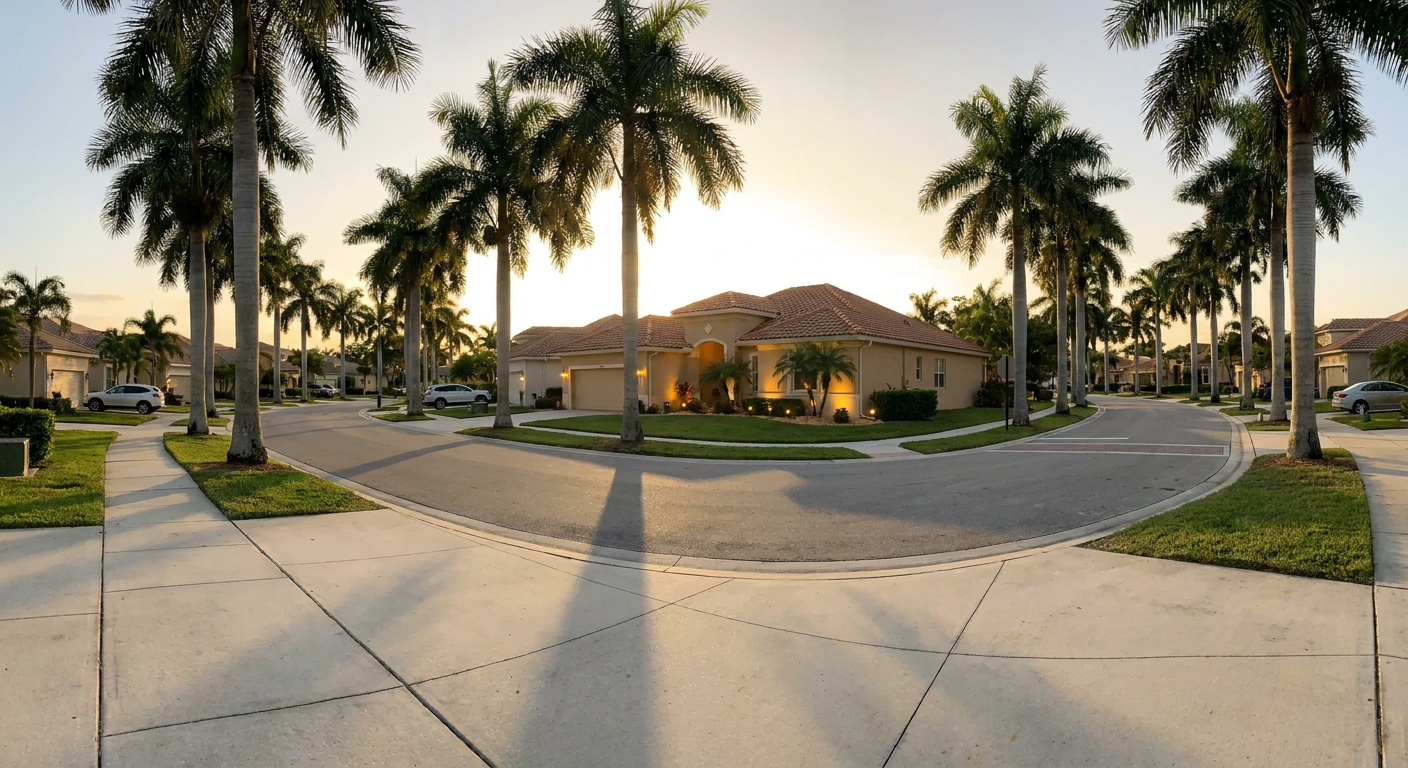
Lake Worth and Palm Beach County offer a genuine clinical advantage for this reason. The combination of a mild climate, proximity to the Atlantic coast, and the quieter residential character of communities like Palm Springs creates an environment that supports nervous system regulation during the most neurologically volatile weeks of early recovery. Distance from a familiar home environment also matters: separation from the people, places, and triggers associated with active use is not just comfort, it’s evidence-based treatment strategy.
For men outside South Florida considering options in Palm Springs, Florida, the travel is worth weighing seriously. The research supports geographic distance as a treatment variable, not just a preference. The practical question is whether your local environment actively undermines recovery, because if it does, staying close to home is a clinical liability, not a convenience.
What a high-quality day looks like in treatment
NIDA’s Principles of Effective Treatment identifies structured daily routines as one of the most consistent predictors of treatment engagement and relapse prevention. A 2014 study from Yale School of Medicine found that patients in programs with highly scheduled daily activities reported 41% lower craving intensity at 30 days compared to those in programs with unstructured time.
A well-designed residential day begins with a morning routine, including physical movement, breakfast, and a brief community check-in, before the first clinical session around 9 a.m. The morning block typically includes either individual therapy or a clinically facilitated group focused on a specific therapeutic modality. Afternoons involve psychoeducation groups, a second individual session or psychiatric check-in, and skills-based programming. Physical activity, whether gym time, yoga, or an outdoor group, is scheduled rather than optional. Evening programming often includes peer support groups, journaling, or 12-step facilitation, followed by a lights-out structure that protects sleep.
When evaluating a center, ask them to email you a sample weekly schedule. The density and specificity of that schedule tells you more about clinical quality than any brochure.
Aftercare and long-term recovery: what happens after residential treatment
A 2014 longitudinal study from the University of Pennsylvania tracked 1,100 adults for five years after completing residential addiction treatment. Participants who engaged in structured continuing care, including alumni programming, ongoing outpatient therapy, and peer support group participation, had relapse rates 40% lower than those who received no continuing care after discharge.
Residential treatment is not the finish line; it’s the foundation. What happens in the 12 months after discharge is as clinically significant as what happens during the residential stay itself. High-quality programs embed aftercare planning into treatment from the first week, not the last, and they have relationships with sober living environments, outpatient providers, and alumni communities that they can activate before a client walks out the door.
Before choosing a facility, ask this: “What does your 12-month aftercare plan look like, and how do you support clients who relapse after discharge?” A strong answer describes specific services, specific contacts, and a non-punitive re-engagement process. A weak answer describes a list of referrals the client is expected to manage independently.
How family members can support recovery without enabling it
A 2010 study from NIDA examining the Community Reinforcement and Family Training (CRAFT) model, conducted across 130 family participants, found that family members trained in CRAFT successfully engaged their loved ones in treatment at twice the rate of Al-Anon participation and nearly three times the rate of traditional intervention approaches. Family involvement is not peripheral to recovery; it is a clinical lever.
The distinction between support and enabling comes down to consequences. Support means being present, maintaining contact within whatever the facility’s communication policy allows, participating in family therapy sessions, and learning about the neuroscience of addiction through educational programming. Enabling means absorbing the consequences of addictive behavior, covering financial fallout, making excuses, or allowing a return to the home environment before clinical readiness is established.
The one concrete boundary to set this week: decide in advance what the conditions for returning home are, and communicate them clearly, calmly, and in writing. That boundary is not a punishment; it is part of the treatment structure.
Taking the first step: how to start the admissions process
SAMHSA’s 2019 treatment gap analysis found that the most common reason people who were ready to seek treatment did not follow through was procedural uncertainty, meaning they didn’t know how to start. The first call is simpler than it seems.
When you call an admissions line, have your insurance card in front of you along with a basic timeline of the substance use history and any known medical or psychiatric diagnoses. The admissions coordinator will ask about substance history, current use patterns, any previous treatment attempts, and basic insurance information. The assessment takes 20 to 45 minutes. From there, a clinical team determines appropriate level of care, benefits verification begins, and in most cases, a start date can be set within 24 to 72 hours of that first call.
If you are exploring options across West Palm Beach and the surrounding area, the process is the same regardless of which program you contact. The one action to take today: call the admissions line of one program you have already vetted for accreditation and ask for a clinical assessment. You don’t need to commit. You need information, and the only way to get it is to make the call.
Frequently asked questions
What types of addiction does treatment in lake worth, florida typically address?
Treatment centers in the Lake Worth and Palm Beach County area address the full range of substance use disorders, including alcohol, opioids (heroin, fentanyl, prescription painkillers), benzodiazepines, cocaine, methamphetamine, and polysubstance use. Most quality programs also address co-occurring mental health conditions like depression, anxiety, and PTSD as part of an integrated dual diagnosis approach.
How long does residential addiction treatment typically last in lake worth?
Most residential programs offer 30, 60, or 90-day stays. Clinical research consistently supports 60 to 90 days as the threshold at which meaningful neurological and behavioral change occurs. The appropriate length of stay is determined by a clinical assessment, but if someone pushes you toward a 28-day program as the default, ask for the clinical rationale.
Will my out-of-network PPO insurance cover treatment at a lake worth facility?
In most cases, yes. Commercial PPO plans include out-of-network benefits that cover a percentage of residential substance use disorder treatment costs after your deductible. The Mental Health Parity Act requires parity with medical benefits. The specific amount depends on your deductible, your plan’s out-of-network reimbursement rate, and whether you’ve met any of your deductible already. Call your insurer’s member services line and ask those specific questions before admission.
Are family members involved in the treatment process?
At high-quality residential programs, family involvement is a structured clinical component, not an optional add-on. This includes family therapy sessions (typically weekly or biweekly), family educational programming on addiction and co-occurring conditions, and clear communication policies about phone and visitation access. Ask any facility you’re considering how family members are specifically integrated into the clinical program.
Is lake worth a good location for out-of-state clients seeking addiction treatment?
Yes. Palm Beach County and the Lake Worth area have a well-established treatment corridor with access to accredited specialty programs, licensed psychiatrists, and step-down care options. The climate, lower stimulus environment, and geographic distance from triggering home environments make South Florida a clinically sound choice for men traveling from out of state. Research supports therapeutic setting as a meaningful variable in early recovery outcomes.
What is the difference between a PHP and an IOP program?
Partial hospitalization (PHP) involves approximately 25-30 hours of clinical programming per week, typically five to six hours per day, five days per week. Intensive outpatient (IOP) involves roughly 9-12 hours per week, three to four hours per day, three or four days per week. Both are step-down levels of care following residential treatment. PHP is appropriate when someone still needs significant clinical support but no longer requires 24-hour supervision. IOP suits those who are stable enough to manage more independent living while maintaining structured treatment accountability.