

Research consistently shows that men who find spiritual meaning in their recovery sustain sobriety at higher rates than those who receive clinical treatment alone, and a faith-based recovery program in Palm Beach County, Florida offers exactly that combination of structured clinical care and intentional spiritual grounding.
What faith-based recovery actually does to the brain and body
A 2019 SAMHSA analysis of over 5,000 adults in residential treatment found that participants enrolled in spiritually integrated programs reported significantly higher rates of sustained abstinence at 12 months compared to those in secular-only settings. The mechanism is specific: shared moral frameworks, community accountability, and a sense of transcendent purpose all reduce the psychological isolation that drives relapse. This is not vague spiritual feeling; it is a measurable accountability structure that clinical treatment alone frequently misses.
What this means in practice: when you evaluate any faith-based program in Palm Beach County, ask directly whether spiritual programming is woven into clinical treatment or simply added as an optional chapel service. The programs that produce durable outcomes use faith as an organizing framework for the entire therapeutic process, from group therapy to discharge planning.
How to evaluate a faith-based program in palm beach county
A 2022 review published by the National Institute on Drug Abuse examined 87 residential treatment facilities and found that accreditation status, licensed clinical staff, and dual-diagnosis capability were the three strongest predictors of positive long-term outcomes. For men carrying co-occurring mental health conditions alongside addiction, these are non-negotiable standards, not optional extras.
Before committing to any residential program, verify four things directly: state licensure from the Florida Department of Children and Families, credentialing with your commercial PPO insurer, licensed clinical staff with documented credentials (LCSW, LMHC, or MD-level oversight), and a written policy confirming that spiritual programming supplements evidence-based care rather than replacing it. If you are exploring options across the wider South Florida region, these same standards apply regardless of location.
The one question to ask any admissions team this week: “Can you send me a list of your clinical staff credentials and your accreditation documentation before we schedule a tour?” A program worth your time will provide that without hesitation.
Faith integration vs. faith replacement
A 2018 study in the Journal of Substance Abuse Treatment followed 312 men through residential programs that varied in how they incorporated faith. Men in programs where spiritual practice operated alongside cognitive behavioral therapy and trauma-informed care showed 34% lower relapse rates at six months than men in programs where prayer and peer ministry served as the primary intervention.
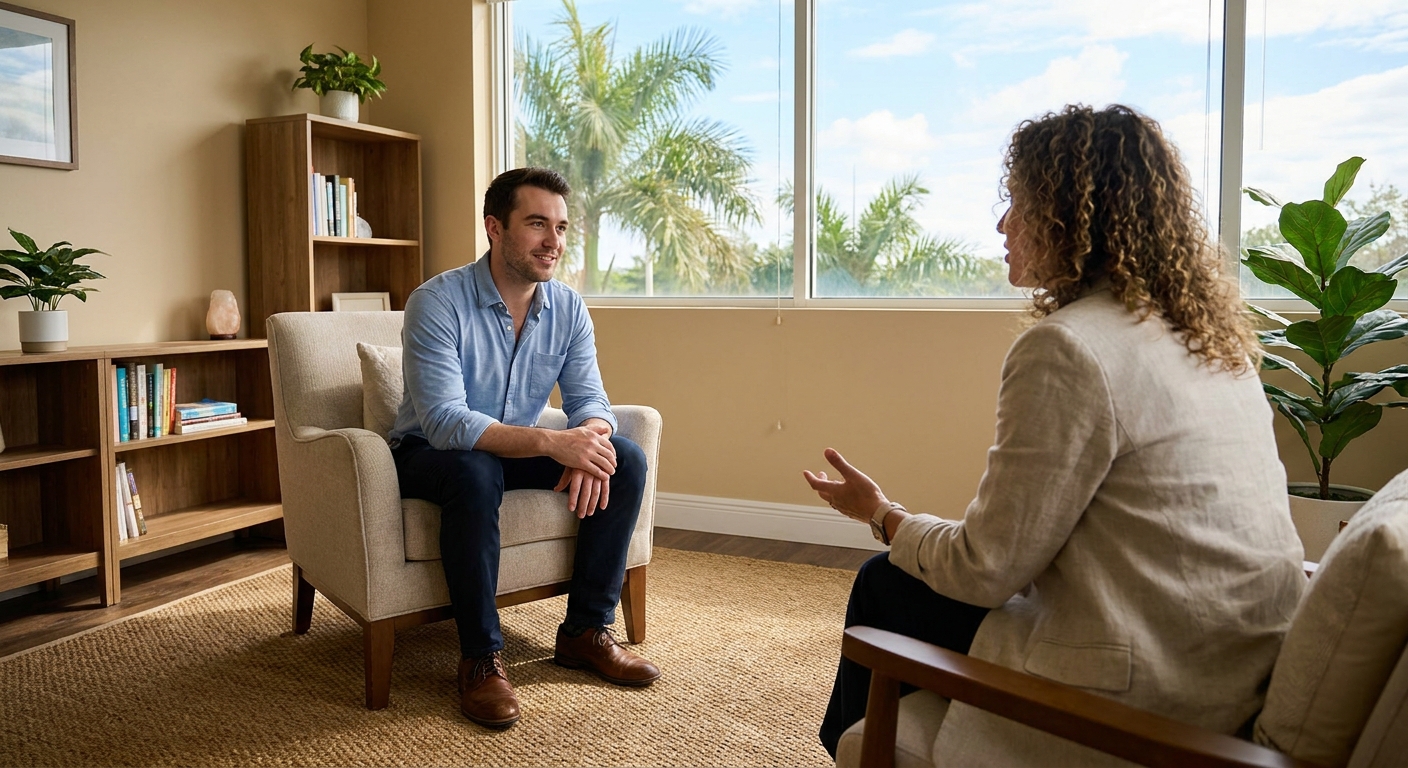
The distinction matters enormously if you have a co-occurring diagnosis. Faith integration means a licensed therapist runs your CBT group in the morning, and a chaplain-led reflection follows in the evening. Faith replacement means prayer is positioned as the clinical intervention itself. Ask the admissions coordinator for the clinical director’s credentials before you tour. If the clinical director is not a licensed mental health professional, that tells you what you need to know. You can learn more about how genuine faith-based programming is structured before making that call.
What to expect from a structured faith-based residential program
A 2021 study from the Journal of Addictive Diseases examined 200 men in residential treatment and found that structured daily schedules, specifically those with eight or more hours of scheduled programming, reduced 90-day relapse rates by 41% compared to unstructured or low-intensity programs. Palm Beach County’s setting reinforces this: the natural environment, distance from urban stress triggers, and serene surroundings support the kind of full immersion that produces lasting neurological change. For men traveling from out of state, that distance is an asset, not an inconvenience.
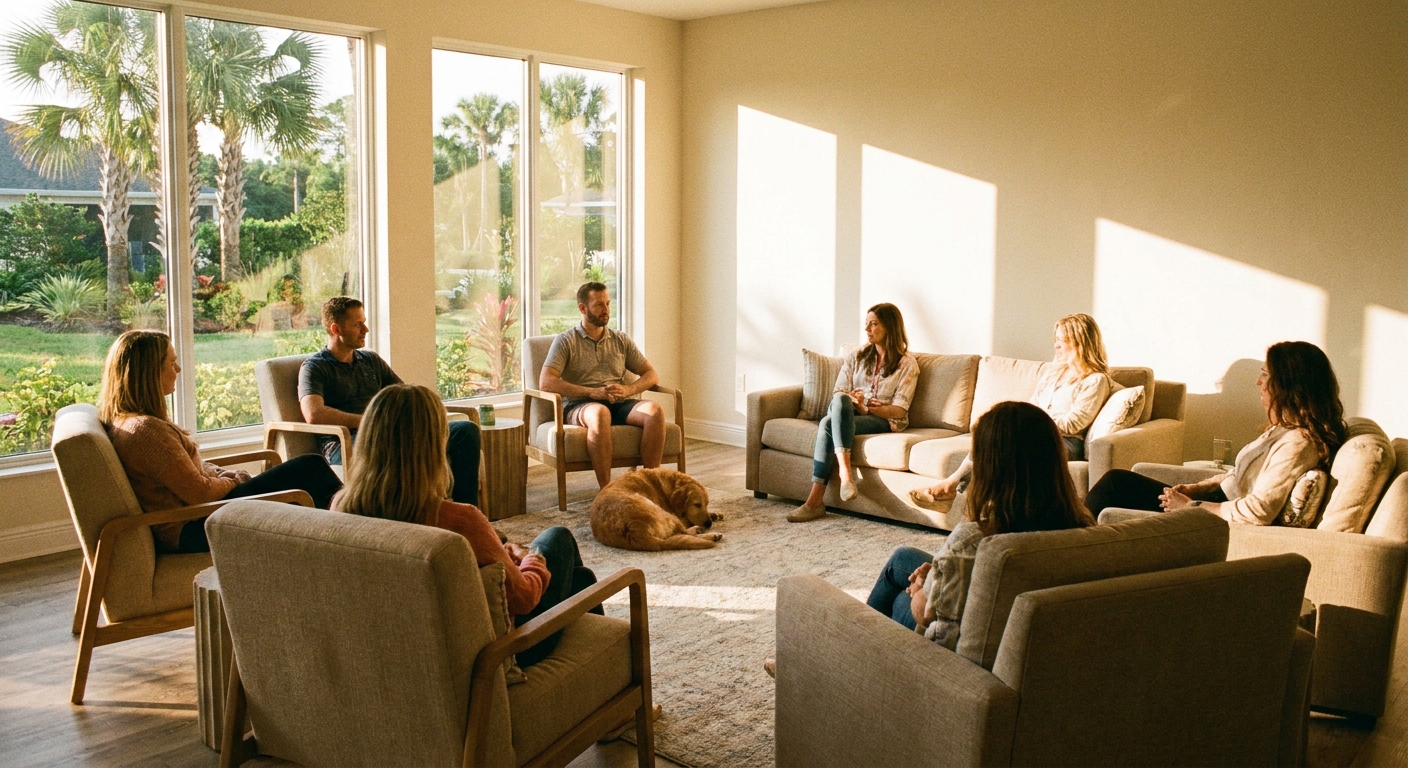
A structured faith-based residential day typically includes morning devotion or reflection, individual therapy, group clinical sessions, peer accountability groups, physical activity, and an evening community gathering anchored in shared values. For men who have already attempted sobriety and relapsed, this combination of routine and meaning-making addresses the two gaps that purely clinical models often leave open: the absence of purpose and the absence of belonging. If you are located closer to treatment programs near Lake Worth, the same structural standards should guide your evaluation there.
To confirm clinical hours meet ASAM level-of-care guidelines for residential treatment, look for a minimum of 20 clinical contact hours per week on any program schedule you review. If a program cannot produce a written daily schedule, do not proceed.
What to try this week
Call one accredited faith-based residential program in Palm Beach County. Ask two questions: what are the clinical director’s licensure credentials, and how many clinical contact hours per week does the program provide? Then request a clinical disclosure sheet listing all treatment modalities and staff qualifications. That single conversation separates men who find lasting recovery from those who stay overwhelmed and undecided.
Frequently asked questions
Do faith-based programs in palm beach county require clients to follow a specific religion?
Not all of them. Some programs are explicitly Christian and incorporate Scripture into daily programming. Others use broader spiritual principles without denominational affiliation. Ask the admissions team directly whether the program is tied to a specific faith tradition and whether participation in religious activities is required or voluntary.
Will my commercial PPO insurance cover a faith-based residential program?
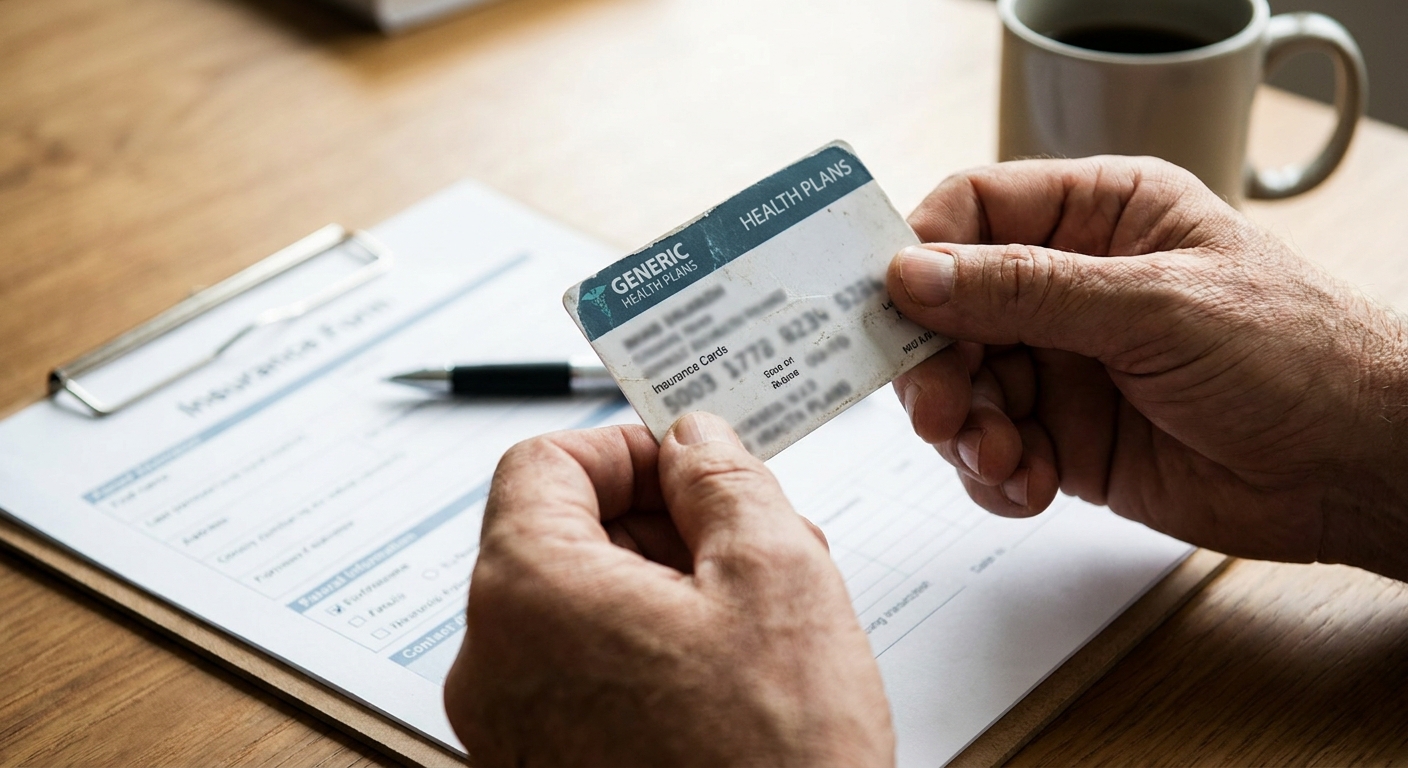
Accredited, licensed faith-based residential programs bill insurance the same way secular programs do. What determines coverage is the program’s licensure status and your plan’s out-of-network benefits, not the faith component. Verify the program is credentialed with your insurer before admission.
Can a faith-based program treat co-occurring depression or anxiety alongside addiction?
Yes, provided the program employs licensed clinical staff and carries dual-diagnosis capability. Confirm this before enrollment by asking specifically whether a psychiatrist or licensed mental health clinician is on staff and available for medication management if needed.
Is palm beach county a good location for out-of-state clients seeking faith-based treatment?
The distance from home stress triggers, the structured residential environment, and South Florida’s natural setting make Palm Beach County a strong destination for out-of-state clients. Many men who have relapsed in their home environment find that geographic separation supports early recovery in ways that local outpatient treatment cannot.
How is a faith-based residential program different from a church recovery ministry?
A licensed residential program operates under state and federal clinical standards, employs credentialed therapists, and provides medical oversight. A church ministry offers peer support and spiritual community, which has value, but does not constitute clinical treatment for addiction or co-occurring mental health conditions. If you have a diagnosed substance use disorder, clinical licensure is the standard to require.