

Faith-based rehab is a structured addiction treatment program that integrates spiritual principles, community accountability, and clinical care into a single, unified approach. If previous attempts at sobriety left you feeling like something was missing, that gap is often not clinical. It is existential, and faith-based treatment is built specifically to address it.
What faith-based rehab actually is
Faith-based rehab combines the full clinical infrastructure of standard addiction treatment, including medical detox, licensed therapists, and evidence-based modalities, with a spiritual framework that gives recovery a deeper foundation of meaning and purpose. According to SAMHSA, roughly one-third of substance use treatment programs in the United States incorporate a spiritual or faith component into their programming. That is not a niche offering. It reflects decades of evidence that lasting sobriety often requires more than symptom management.
The simplest version of this: faith-based rehab does not replace clinical care with prayer. It adds a spiritual layer that addresses the parts of addiction that medication and therapy alone struggle to reach, including shame, purposelessness, and moral injury.
How faith-based rehab differs from standard treatment
Standard clinical programs treat addiction as a medical and psychological condition. That framing is accurate, but it is incomplete for many men. A 2019 Harvard T.H. Chan School of Public Health study of more than 5,000 adults found that regular religious or spiritual engagement was associated with significantly lower rates of substance use disorder, less depression, and higher reported life satisfaction over time.
What this means in practice: if you have been through a secular program and relapsed, the missing variable may not be the quality of the clinical care. It may be the absence of a spiritual framework that gives the work meaning beyond symptom reduction. Faith-based rehab adds that third dimension, placing meaning, moral accountability, and community alongside the clinical structure that any quality program provides.
What a typical day in faith-based rehab looks like
A day in faith-based rehab is structured from morning to night, and the structure is intentional. Addiction thrives in unstructured time. A typical schedule begins with morning spiritual practice, which includes prayer, meditation, or scripture reading, followed by group therapy, individual counseling sessions, and faith-integrated group work such as 12-step programming with spiritual framing. Physical activity is built into the afternoon. Evening closes with reflection, often facilitated by a chaplain or faith-based group leader.
The key distinction from a purely secular program is not the volume of spiritual activity. It is the integration. Clinical appointments and spiritual practices are designed to reinforce each other, not compete for time.
Clinical therapies that run alongside the spiritual framework
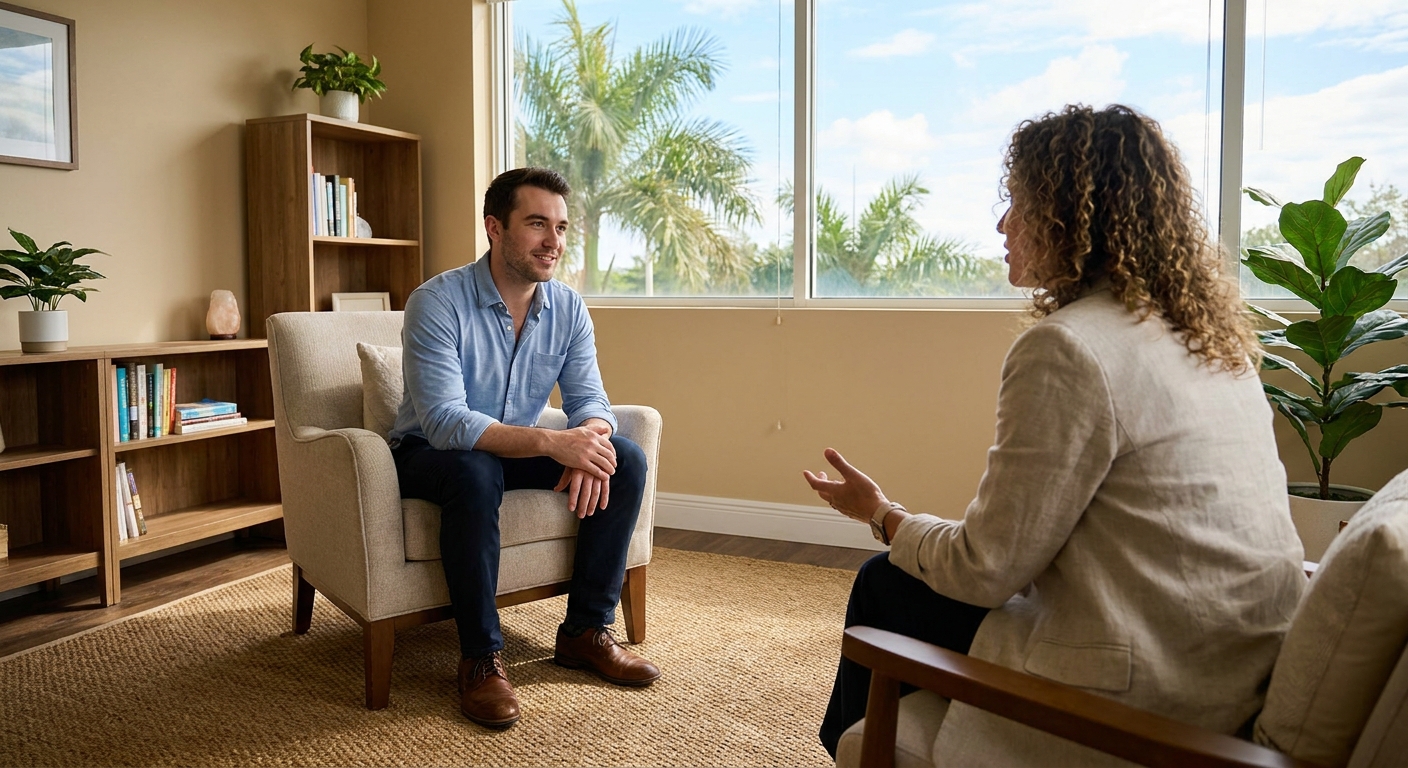
Quality faith-based programs do not ask you to choose between spiritual grounding and clinical rigor. Licensed therapists deliver cognitive behavioral therapy, trauma-informed care, and dual diagnosis treatment within the same schedule as chaplain-led sessions and spiritual reflection.
That dual diagnosis component matters. SAMHSA data consistently shows that roughly half of adults with a substance use disorder also carry a co-occurring mental health condition such as depression, anxiety, or PTSD. Entering a program that treats both simultaneously produces better outcomes than treating either in isolation. The spiritual framework accelerates this work by addressing guilt and shame directly, which are psychological wounds that clinical therapy alone often circles without landing.
Spiritual practices used in treatment
The spiritual practices in a structured faith-based program are not optional add-ons scheduled at the end of the day. They are built into the clinical architecture. These include daily prayer, scripture study, chaplain-led individual and group sessions, faith-based peer meetings, and community service components that rebuild a sense of purpose and contribution.
Addiction erodes identity. Spiritual practice in recovery is designed to reconstruct it, offering a man a framework for who he is beyond his history with substances.
Do you have to be religious to enter a faith-based program?
This is the question that stops many men from making the call, and the answer is no. Many quality faith-based programs admit men across a wide spectrum of belief, from committed Christians to those who are spiritually curious or openly skeptical about formal religion.
A study published in the Journal of Substance Abuse Treatment examined non-religious spirituality and sobriety outcomes and found that men who identified as “spiritual but not religious” showed outcomes comparable to those with traditional religious commitments when enrolled in spiritually-integrated programs. The mechanism is not doctrinal adherence. It is openness to the idea that recovery requires something larger than willpower alone.
If that framing resonates, faith-based rehab deserves serious consideration regardless of where you stand on formal religion. For men in the Palm Beach County area exploring structured options that incorporate faith alongside clinical care, the threshold for entry is curiosity, not conviction.
How effective is faith-based rehab?
A 2015 study published in the American Journal of Drug and Alcohol Abuse examined outcomes for men in 12-step and faith-integrated residential programs and found significantly higher abstinence rates at 12-month follow-up compared to secular outpatient programs. The mechanism is not mysterious. Spiritual community creates accountability structures that persist after discharge, and a sense of purpose built during treatment becomes a relapse buffer when life gets difficult again.
Effectiveness in faith-based rehab is not built on faith alone. It is built on the convergence of clinical structure, peer accountability, and spiritual meaning operating simultaneously. Remove any one of those legs and the stool becomes unstable. When they work together, the result is a form of recovery that addresses addiction at every level it operates: physical, psychological, and spiritual.
For men evaluating Christian-oriented programs in the South Florida area, the evidence base for faith-integrated treatment is substantially stronger than its reputation suggests.
What faith-based rehab does for co-occurring mental health conditions
Research from the National Institute on Drug Abuse shows that men in recovery who report high levels of spiritual engagement experience measurably lower rates of depression and anxiety symptoms compared to men in clinical-only programs. For a population where guilt, shame, and spiritual emptiness are among the most commonly reported relapse triggers, that finding is not incidental. It is the point.
Shame is particularly corrosive in men with addiction histories. Clinical therapy can identify it. Spiritual practice, especially community-based spiritual practice, can begin to dissolve it. A faith-based program treats shame not just as a cognitive distortion to be reframed, but as a moral wound that requires forgiveness, community, and renewed purpose to heal.
If depression or anxiety has shadowed your previous attempts at sobriety, a program that treats mind, body, and spirit simultaneously closes the gap that clinical-only treatment leaves open.
What to look for in a quality faith-based rehab program
Not all faith-based programs are built the same. Four questions separate quality programs from inadequate ones, and you should have direct written answers to all four before admission.
First, what clinical credentials and licensed staff does the program employ? Spiritual programming should complement licensed clinical care, not substitute for it. Second, what is the specific faith framework, and is it denomination-exclusive or inclusive of men across different spiritual backgrounds? Third, how is aftercare structured? Residential treatment is the beginning, not the end, and the transition plan matters as much as the program itself. Fourth, does the program treat co-occurring mental health conditions alongside addiction, or does it handle only substance use?
SAMHSA’s criteria for quality substance use treatment programs emphasize individualized care, licensed staff, and continuity of care across levels of treatment. A program that answers all four questions directly and in writing before you arrive is a program that takes its clinical obligations seriously.
Does insurance cover faith-based rehab?
Many faith-based residential programs accept commercial PPO insurance and private pay. The Mental Health Parity and Addiction Equity Act requires insurers to cover substance use treatment at parity with physical health care, which means your out-of-network commercial PPO is likely to cover a meaningful portion of residential treatment costs.
The practical step here is straightforward. For men considering faith-based addiction treatment in the Lake Worth area, admissions teams typically verify benefits within 24 hours at no cost to you. Do not let an assumed cost barrier become the reason you delay. One phone call to an admissions team tells you exactly where you stand financially before you commit to anything.
What to try this week
Call the admissions line of one faith-based residential program today and ask them to verify your insurance benefits. That single action moves you from researching to deciding. The cost question is almost always answerable within a day, and removing it from the equation lets you focus on the actual decision: whether this approach to recovery is right for you.
Frequently asked questions
What makes faith-based rehab different from a 12-step program?
A 12-step program is a peer-support model, typically attended in the community a few times per week. Faith-based rehab is a full residential or intensive treatment program that includes licensed clinical staff, evidence-based therapies, medical support, and a spiritual framework integrated throughout. The 12-step model is often one component inside a faith-based residential program, not a synonym for it.
Is faith-based rehab only for christians?
Not necessarily. Many programs are rooted in Christian principles, but a number of quality faith-based programs welcome men across a range of beliefs, including those who identify as spiritual but not religious. The entry point is openness to spiritual growth, not doctrinal agreement. Ask any program directly about its faith framework and how it serves men who are not affiliated with a specific denomination.
Will I receive medical care and licensed therapy in a faith-based program?
Yes, in any accredited faith-based rehab. Spiritual programming is designed to complement licensed clinical care, not replace it. A quality program employs licensed therapists, may offer medically supervised detox, and uses evidence-based modalities such as cognitive behavioral therapy and trauma-informed care alongside its spiritual components.
Can faith-based rehab treat depression or anxiety alongside addiction?
Yes. Quality faith-based programs offer dual diagnosis treatment, addressing co-occurring mental health conditions such as depression, anxiety, and PTSD simultaneously with addiction. Research consistently shows that treating both conditions together produces better outcomes than addressing them sequentially or in isolation.
How long does faith-based residential rehab typically last?
Most residential faith-based programs run between 30 and 90 days, depending on the severity of the addiction and the presence of co-occurring conditions. Longer stays are generally associated with better long-term outcomes. Aftercare, including outpatient programming and faith-based community support, typically follows the residential phase.
What happens after residential faith-based treatment ends?
Aftercare is where long-term recovery is built or lost. Quality programs structure a step-down plan before you leave, which commonly includes intensive outpatient programming, ongoing individual therapy, participation in a faith-based recovery community, and regular contact with a sponsor or spiritual mentor. Ask any program to describe its aftercare model in detail before you commit to admission.