


Finding the right level of care for addiction recovery in South Florida is genuinely confusing, especially when you’re already exhausted and running out of patience for the wrong answers. This guide cuts through the noise and focuses on what actually separates an effective intensive outpatient program in South Florida from one that wastes your time and money.
What an intensive outpatient program actually delivers
A 2014 review published in Psychiatric Services analyzed evidence across multiple IOP studies and found that intensive outpatient programs produce outcomes comparable to residential treatment for most adults with substance use disorders, at significantly lower cost and with greater flexibility. That finding has held up across subsequent research, and it reframes what IOP actually is: not a watered-down alternative to inpatient care, but a legitimate primary treatment level for men who are medically stable and have a safe place to sleep.
In measurable terms, an IOP typically runs 9 to 20 clinical hours per week, spread across three to five days. Sessions include group therapy, individual counseling, and psychoeducation. The “intensive” part is real: this is not a weekly check-in. It is structured, frequent contact with a clinical team, designed to build the skills and accountability that sustain sobriety in real life rather than in an isolated residential bubble.
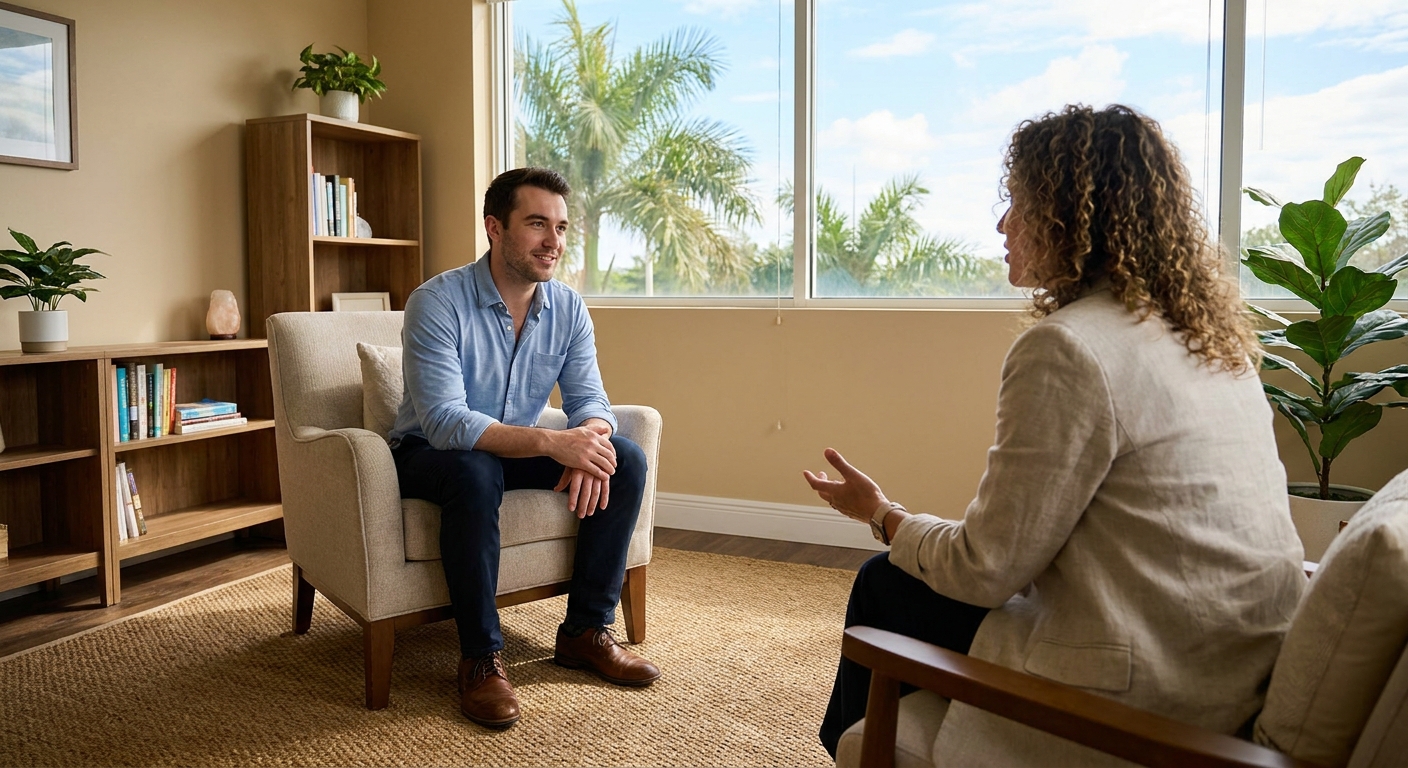
A day in IOP for an adult man in recovery looks something like this: morning group therapy focused on cognitive behavioral skills or relapse prevention, an individual session with a primary counselor two to three times per week, and structured time in the afternoon before returning to sober living or home. The structure is the point. It mirrors the rhythm of a functioning adult life while keeping clinical support close.
Who IOP is and isn’t the right fit for
The American Society of Addiction Medicine’s patient placement criteria (ASAM Level 2.1) defines IOP as appropriate for men who have completed medical detox or a residential or partial hospitalization program, have stable housing or access to supervised sober living, and carry co-occurring mental health conditions that need ongoing clinical structure but not 24-hour supervision. This is the sweet spot: men who are medically stable, motivated, and ready to begin integrating recovery skills into daily life.
IOP is not the right starting point for men still in acute withdrawal, those with active psychiatric crises requiring inpatient stabilization, or those without a stable and sober environment to return to each night. If any of those apply, the honest next step is a higher level of care first.
The one question worth asking a clinician directly: “Based on my history and current symptoms, what ASAM level of care do you recommend, and why?” A legitimate program answers that with clinical reasoning, not a sales pitch.
The factors that separate effective IOPs from mediocre ones
A 2020 SAMHSA report on treatment quality found that programs with individualized treatment planning, on-site psychiatric services, and evidence-based modalities produced significantly better six-month outcomes than programs relying on group therapy alone. The gap is not small. The presence of a psychiatrist on staff, the use of CBT and trauma-informed approaches, and formal family involvement protocols are the markers that predict whether a program produces durable recovery rather than a temporary pause.
Surface-level amenities, a nice facility, ocean views, gourmet meals, are not clinical indicators. They matter for comfort and engagement, but they do not predict outcomes. Before enrolling anywhere, ask two non-negotiable questions: “Do you have a licensed psychiatrist on staff who sees clients regularly?” and “Is my treatment plan individualized, or does every client follow the same curriculum?” The answers tell you most of what you need to know.
Dual diagnosis treatment: why it changes everything
According to NIDA, roughly 50 percent of people with a substance use disorder also meet criteria for at least one co-occurring mental health condition. For men specifically, depression, anxiety, PTSD, and unprocessed trauma are common drivers of continued use. Treating the addiction without addressing those conditions is the single most reliable path to relapse.
Integrated dual diagnosis care means a psychiatrist and a therapist coordinate your treatment as a single plan, not parallel tracks. It means medication management is available if indicated, and it means your therapy directly addresses the mental health layer, not just the substance use behavior. When evaluating a program, the question to ask is specific: “How do your psychiatric and therapy teams coordinate care for clients with co-occurring conditions?” Vague answers about “holistic treatment” are not the same as a real answer. You want to hear about weekly clinical team meetings, shared documentation, and direct communication between your prescriber and your therapist.
The male-only environment and why structure matters
A 2018 study published in the Journal of Substance Abuse Treatment found that gender-specific treatment programs for men produced higher group cohesion and greater willingness to disclose trauma and shame-based experiences compared to mixed-gender settings. The mechanism is straightforward: men engage differently when social performance pressure is reduced. In a male-only group, the conversation goes deeper, faster.
This dynamic is especially relevant for men working through alcohol or substance dependence in Palm Beach County, where access to structured, male-only clinical environments is limited. The practical thing to look for when evaluating any program: ask to speak with a current or former client (with appropriate privacy protections), or ask specifically how group therapy topics are structured. A program that can describe its group content in clinical terms, not just “peer support,” is a program with an actual clinical model behind it.
Navigating insurance and cost in south florida
A 2023 KFF analysis of behavioral health coverage found that out-of-network mental health and substance use services are reimbursed at a fraction of in-network rates, but commercial PPO plans remain the most flexible option for accessing high-quality specialty care. If you carry an out-of-network commercial PPO, you have real options. Understanding what that actually means in practice: your plan has an out-of-network deductible and an out-of-network coinsurance rate. Once you meet the deductible, the plan pays a percentage of the “allowed amount” for covered services. The remainder is your responsibility.
Before calling an admissions line at any program, have three things ready: your insurance card, the member services number on the back, and a list of specific questions. Ask the program’s admissions team to conduct a benefits verification call on your behalf. A reputable program does this before you commit to anything. Confirm that they will tell you, in writing, what your estimated out-of-pocket cost will be based on your specific plan. Private-pay rates for IOP in the South Florida market typically range from $300 to $600 per day depending on services included. Get the number in writing before you sign anything.
What the south florida setting adds to recovery
A 2019 study in Drug and Alcohol Dependence found that geographic relocation during early treatment, specifically moving away from familiar using environments and social networks, was associated with significantly better 90-day treatment retention. The mechanism is not complicated: distance from triggers and from people who knew you as someone who used creates space for a different identity to take hold.
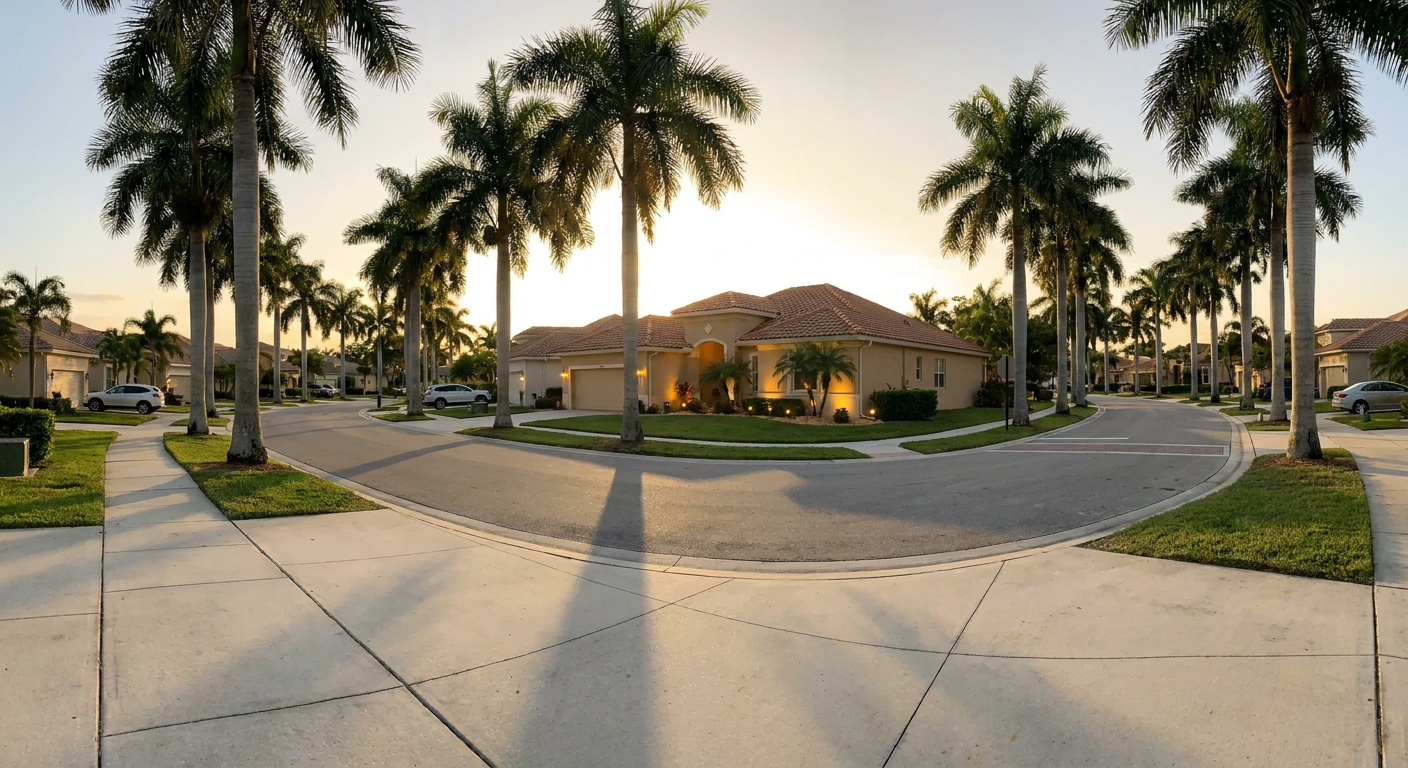
The Palm Springs and Lake Worth area offers something specific for men coming from out of state: a structured, clinical environment in a climate that supports year-round outdoor activity, proximity to an established sober community, and distance from whatever environment was fueling the problem. For an overview of what structured IOP looks like in the Palm Springs area, the setting itself is part of the clinical rationale, not just marketing. The honest question to ask yourself: does the program use the environment as part of a structured therapeutic model, or is it simply a backdrop for an otherwise generic program?
Red flags to watch for when evaluating programs
Florida has a documented history of fraudulent treatment practices. A 2017 investigation by the Florida Attorney General and subsequent legislative action under the Baker Act reforms identified patient brokering, insurance fraud, and substandard care as systemic problems in the South Florida treatment market. The state now requires all substance use treatment facilities to hold an active license from the Florida Department of Children and Families.
Specific red flags to watch for: vague or absent discharge planning, no psychiatrist on staff, pressure to commit financially before a clinical assessment, guaranteed insurance billing without verification, and no named evidence-based modalities in the program description. One concrete verification step: before any financial commitment, look up the facility’s license at the Florida DCF online license search tool. If the license is not current or does not exist, stop there.
What to do before the end of this week
Call and ask for a clinical assessment, not an admissions call. Those are two different things. An admissions call is a sales conversation. A clinical assessment is a structured interview conducted by a licensed clinician to determine your appropriate level of care, your co-occurring conditions, and what kind of treatment environment fits your situation.
A program that recommends a level of care before conducting a clinical assessment is not making a clinical recommendation. It is making a business one. For more on how to evaluate what a full IOP structure actually involves, the assessment conversation is the right place to start.
You are likely somewhere between overwhelmed and cautiously ready. That is exactly the right place to be for this step. The next move is smaller than it feels: one call, one honest conversation with a clinician who will tell you what level of care actually fits. That call is what separates men who find the right program from men who end up in the wrong one.
Frequently asked questions
How many hours per week is a typical intensive outpatient program in south florida?
Most IOPs run between 9 and 20 clinical hours per week, spread across three to five days. The specific schedule varies by program, but expect structured morning or afternoon sessions lasting three to four hours each day. Programs at the higher end of that range are closer to a partial hospitalization level of intensity.
Can you live at home during an intensive outpatient program?
Yes. IOP is specifically designed for men who have stable housing or access to supervised sober living. Many programs in South Florida offer an integrated sober living option, where you live on-site or in an affiliated residence while attending IOP sessions, which keeps the clinical team and your living environment connected.
Does commercial PPO insurance cover IOP in south florida?
Most commercial PPO plans cover substance use treatment, including IOP, under mental health parity laws. Out-of-network benefits vary by plan, but PPO holders generally have the most flexibility for accessing specialized programs. Always request a benefits verification from the program before enrolling so you have a written estimate of your out-of-pocket cost.
What is the difference between IOP and PHP?
Partial hospitalization programs (PHP) run 20 to 30 or more clinical hours per week and represent a higher level of intensity than IOP. PHP is typically the step before IOP in a continuum of care. Men who complete PHP and are stable often step down to IOP, which provides continued clinical structure while allowing more independence. The best programs offer both levels with the same clinical team so nothing is lost in the transition.
Is south florida a good place for out-of-state men to attend IOP?
Research supports the clinical benefit of geographic distance from familiar using environments during early recovery. Palm Beach County specifically offers year-round favorable climate, proximity to an active sober community, and access to structured outdoor therapeutic activities. For men whose home environment includes active triggers or using relationships, a destination setting is a genuine clinical advantage, not just a lifestyle choice.