


Most men searching for IOP addiction treatment in Palm Springs, Florida aren’t sure what separates a legitimate program from one that just uses the right language. This guide breaks down the clinical criteria, the red flags, and the questions to ask before you commit to anything.
Why IOP is the right level of care for many men in recovery
According to SAMHSA’s 2022 National Survey on Drug Use and Health, intensive outpatient programs serve over 900,000 adults annually, and completion rates for well-structured IOPs are comparable to those of residential treatment for men who have achieved medical stability. That last qualifier matters. IOP works when you don’t need 24-hour medical supervision but do need far more structured clinical contact than standard weekly therapy provides.
Intensive outpatient treatment typically runs between 9 and 20 hours of clinical programming per week, spread across three to five days. It fills a gap that pure inpatient or pure outpatient care can’t. Residential treatment provides containment; standard outpatient provides maintenance. IOP provides structure, momentum, and therapeutic depth while allowing men to return home or to sober living at night. In Palm Springs and throughout Palm Beach County, this level of care has become central to how men navigate recovery without stepping entirely out of their lives.
What “intensive outpatient” actually means , and what it doesn’t
A 2021 study published in the Journal of Substance Abuse Treatment examined 1,400 outpatient treatment episodes and found that programs delivering fewer than nine clinical contact hours per week produced significantly worse 90-day outcomes than those meeting or exceeding ASAM guidelines. The label “intensive outpatient” means nothing without the hours behind it.
The clinical minimum for a legitimate IOP is nine hours per week across at least three days. That floor is not a recommendation; it is the standard set by the American Society of Addiction Medicine. Programs that schedule two groups per week and call it IOP are not providing IOP. When you call a program, ask for the total weekly clinical contact hours in writing. If the answer is vague, that tells you what you need to know.
Understanding where IOP fits in the full continuum is essential before you start making calls, and reviewing how different outpatient tiers are structured across South Florida can help you match the right level to where you are right now.
The difference between IOP, PHP, and standard outpatient
Partial hospitalization (PHP) runs 20 to 30 hours of clinical programming per week and is designed for men who need near-daily structure but not overnight medical care. It sits one step below inpatient. IOP sits below PHP, typically running 9 to 15 hours per week, and is suited for men who have stabilized medically and clinically enough to benefit from reduced intensity. Standard outpatient, at one to three sessions per week, is a maintenance tier, not a treatment intervention for active addiction.
The strongest programs offer all three levels in one facility so transitions happen without losing your treatment team or your momentum. The action here is straightforward: before calling any program, honestly assess where you are. If you’re just out of detox and haven’t had more than two weeks of sobriety, PHP is likely the right entry point, with IOP as the natural next step.
The clinical components that separate effective IOPs from mediocre ones
SAMHSA’s Treatment Improvement Protocol 47 identifies Cognitive Behavioral Therapy, Dialectical Behavior Therapy, Motivational Interviewing, and trauma-informed care as the evidence-based modalities with the strongest outcomes for both substance use and co-occurring mental health disorders. A program offering only group sessions, with no individual therapy and no psychiatric oversight, does not meet this standard.
Request the weekly clinical schedule in writing before enrolling. A legitimate IOP will show you a schedule that includes individual therapy, structured group therapy with specific modalities, psychoeducation, and access to psychiatric services. If the schedule is a single vague block labeled “group,” walk away.
Individual therapy frequency
SAMHSA’s 2023 National Survey on Drug Use and Health found that 53.4% of adults with a substance use disorder also meet criteria for a co-occurring mental health condition. For men, that figure is closely tied to untreated depression, trauma, and anxiety. Individual therapy is where those conditions actually get addressed. Group work builds community and skills; one-on-one sessions with a licensed therapist go deeper.
A strong IOP includes at least one individual session per week, and two sessions weekly is the standard for men managing dual-diagnosis conditions. The question to ask is not whether individual therapy is available but how many sessions are included in the weekly structure. “Available upon request” is not the same as “built into your schedule.”
Medication-assisted treatment (MAT) access
NIDA’s research consistently shows that medications like buprenorphine, naltrexone, and acamprosate reduce relapse rates for opioid use disorder by 50% or more and meaningfully improve outcomes for alcohol use disorder. MAT is not a crutch or a shortcut. It is a first-line treatment for specific disorders, and withholding it is a clinical failure, not a commitment to “real” recovery.
A strong IOP either prescribes MAT on-site through a physician or ARNP, or has a coordinated referral pathway with clear communication between prescribers and therapists. If MAT is relevant to your situation, confirm before enrollment whether the program handles it directly or refers out, and verify that those two providers actually communicate.
Dual-diagnosis (co-occurring mental health) treatment
A 2021 study in JAMA Psychiatry found that men with untreated co-occurring disorders were 2.4 times more likely to relapse within 12 months of completing addiction treatment than those who received integrated care. The word “integrated” is doing real work in that sentence. Integrated dual-diagnosis treatment means the same clinical team addresses both addiction and mental health concurrently, in the same program, with shared treatment goals.
Programs that silo these tracks, sending you to one provider for addiction counseling and a separate referral for psychiatric care, break the continuity that produces outcomes. Ask directly: does the psychiatrist or ARNP on staff treat both conditions, or does the program refer out for mental health separately?
How to evaluate a program’s staff credentials
CARF International, which accredits behavioral health programs, links staff credential levels directly to patient outcomes in its standards documentation. The clinical difference between a Certified Addiction Counselor (CAC), a Licensed Clinical Social Worker (LCSW), a Licensed Mental Health Counselor (LMHC), and a licensed psychiatrist is not administrative; it reflects training depth, scope of practice, and the complexity of cases each professional can treat.
A program heavy on peer support and light on licensed clinicians cannot provide the psychiatric oversight, individual therapy, or medication management that complex dual-diagnosis cases require. Peer support is valuable. It is not a substitute for licensed care. Ask for a staff roster with credentials and licensing board affiliations before your first session, and verify licensure through the Florida Department of Health’s online lookup tool.
What the palm springs / palm beach county setting offers , and what to watch for
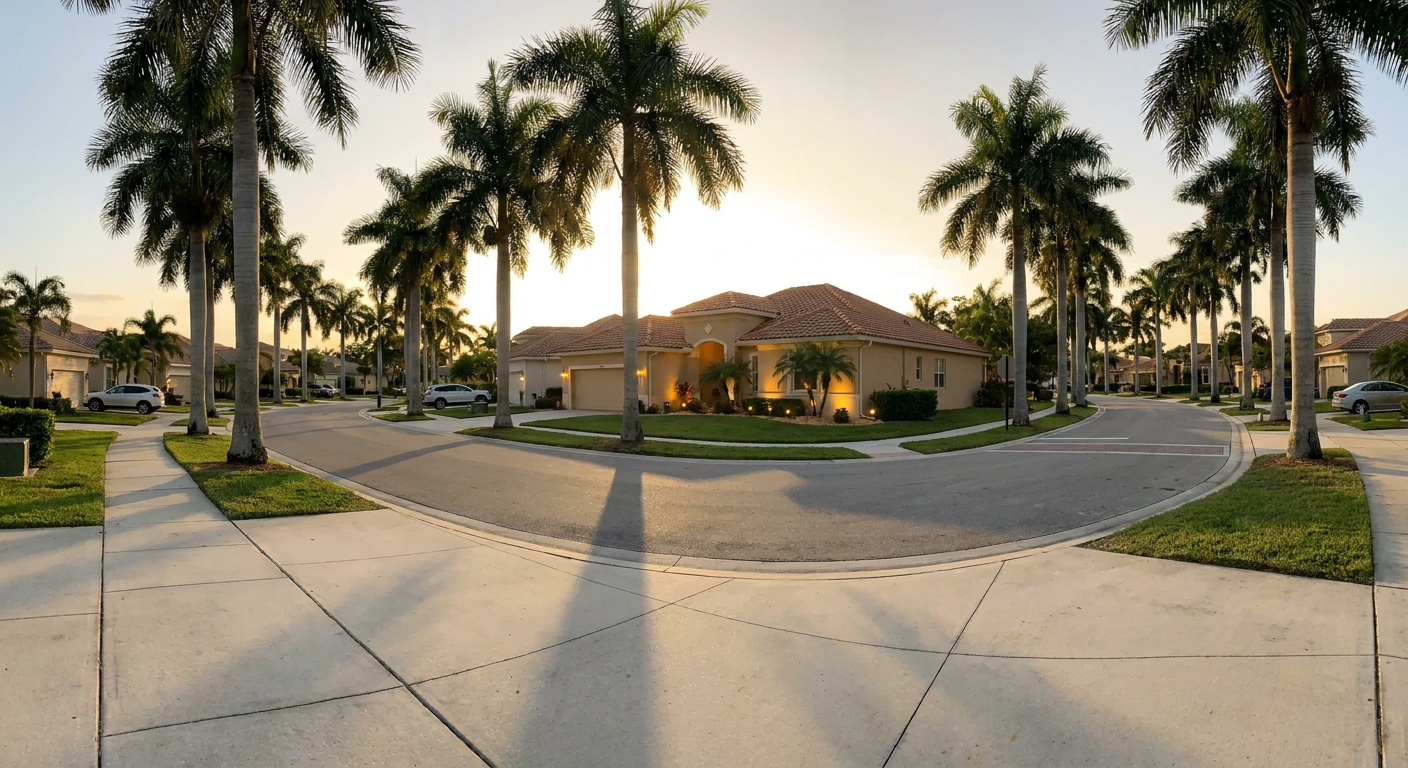
A 2020 Yale School of Medicine study on cue-exposure and relapse found that environmental triggers, the places, people, and routines associated with past use, account for a significant portion of early relapse risk. Removing yourself from that environment, even temporarily, reduces the cognitive load of early recovery. Palm Springs and Palm Beach County offer a genuinely different physical context: a warm, structured, and relatively quiet setting that creates distance from home triggers without isolation.
For out-of-state clients, this distance is one of the strongest arguments for traveling. That said, the setting is an advantage only when the clinical program is solid. Resort-style amenities are a comfort; they are not treatment. Verify that weekly clinical contact hours meet or exceed ASAM guidelines regardless of how well-photographed the facility is.
Out-of-state and travel considerations
Men traveling from other states for IOP face two specific challenges: insurance verification across state lines and continuity of care when they return home. A legitimate program addresses both before you arrive, not after discharge.
On the insurance side, confirm in writing that your out-of-network PPO benefits cover out-of-state behavioral health treatment and that the program has experience navigating multi-state billing. On the continuity side, a strong program begins building your aftercare plan in the first week, not the last. For men choosing IOP in the Palm Springs and Lake Worth area, coordinating with a provider back home before discharge is the standard, not an optional add-on. Confirm that the program will coordinate a continuing care plan with a provider in your home state before you book a flight.
Insurance, cost, and what to ask before you commit
The Mental Health Parity and Addiction Equity Act requires that commercial insurers cover behavioral health treatment at the same level as medical care. SAMHSA data shows that most commercial PPO plans include out-of-network behavioral health benefits, but the specifics vary significantly by plan. “We accept insurance” is not the same as “your insurance covers this program at a rate you can manage.”
Call your insurance carrier directly before enrolling anywhere. Ask for your out-of-network behavioral health deductible, your out-of-pocket maximum, and your reimbursement rate for Revenue Code 0906, which is the billing code for intensive outpatient services. Programs that promise full coverage without running a formal verification are either guessing or misleading you. Get the verification in writing.
Red flags to watch for when choosing an IOP in palm springs
Florida’s Agency for Health Care Administration documented over 100 complaints against unlicensed or substandard substance abuse treatment facilities between 2020 and 2023, a number that reflects the state’s ongoing struggle with predatory operators. The red flags are consistent across cases.
Patient brokering, where a facility pays for referrals, is illegal in Florida and a sign that business interests override clinical ones. Vague or unwritten clinical schedules signal that the program is not delivering what it claims. No licensed psychiatrist or ARNP on staff means dual-diagnosis care is not actually available. Promises of guaranteed sobriety are not just misleading; they’re a clinical impossibility. High client-to-therapist ratios, anything above eight to one in group settings, dilute the therapeutic value of every session. Look up the program’s license status on the Florida Department of Children and Families online database before making any calls.
What a strong aftercare plan looks like , and why it determines long-term outcomes
A 2022 analysis published in JAMA Psychiatry, drawing on data from over 1,200 treatment completers, found that men who engaged in a formal continuing care plan for 12 months post-treatment had sobriety rates nearly double those of men who completed treatment without structured follow-up. What happens after IOP ends is as important as the IOP itself.
A strong aftercare plan includes a step-down to standard outpatient therapy, alumni programming that maintains community and accountability, coordination with sober living if needed, and ongoing psychiatric care for any co-occurring conditions. The specific structure of an intensive outpatient program should naturally scaffold into this plan, not drop off abruptly at discharge. Before enrolling in any IOP, ask the admissions coordinator to walk you through exactly what the discharge and aftercare process looks like. If they can’t answer that question clearly, that gap will matter most when you’re most vulnerable.
What to do this week
One action matters most right now: call your insurance carrier, ask for your out-of-network behavioral health benefits, and request the specific reimbursement rate for Revenue Code 0906. That single call gives you the financial clarity to move forward without guessing, and it opens the door to a real conversation with any program you’re considering without requiring any final commitment.
Frequently asked questions
How many hours per week does IOP in palm springs typically involve?
A legitimate IOP runs a minimum of nine clinical hours per week across at least three days. Many programs in Palm Beach County offer 12 to 15 hours weekly for men who benefit from more intensive structure. Anything under nine hours per week does not meet ASAM’s definition of intensive outpatient and should not be represented as such.
Can men attend IOP while living in sober housing?
Yes, and for many men this combination produces better outcomes than either option alone. Sober living provides structure, peer accountability, and a drug-free environment at night, while IOP delivers the clinical depth required for meaningful recovery work. Programs that integrate both under one roof eliminate the coordination gap between where you sleep and where you receive treatment.
Does IOP treat co-occurring mental health conditions like depression or anxiety?
It depends on the program. A dual-diagnosis IOP has a licensed psychiatrist or ARNP on staff who treats both addiction and co-occurring conditions concurrently, within the same program. Not every program does this. Ask specifically whether the psychiatric provider treats mental health conditions on-site or refers out, and whether the addiction counselor and psychiatrist share treatment notes and communicate regularly.
Will my out-of-network PPO insurance cover IOP treatment in palm springs?
Most commercial PPO plans include out-of-network behavioral health benefits, and the Mental Health Parity and Addiction Equity Act requires parity with medical coverage. That said, your specific deductible, out-of-pocket maximum, and reimbursement rate vary by plan. Call your insurer directly and ask for your benefits under Revenue Code 0906 before enrolling anywhere.
Is IOP appropriate after completing residential or PHP treatment?
IOP is the standard next step after residential treatment or PHP for men who have achieved medical and clinical stability. It provides continued therapeutic structure while allowing a gradual return to daily life. Programs that offer PHP and IOP in the same facility make this transition seamless, since the treatment team and therapeutic relationships carry forward rather than starting over.
How long does IOP treatment typically last in palm beach county?
Most IOP programs run between 8 and 12 weeks, though this varies based on clinical need and progress. Men managing complex dual-diagnosis conditions or those with previous treatment episodes often benefit from longer engagement. Duration should be determined by clinical criteria, not by insurance authorization limits or a fixed calendar. Ask any program you’re considering how length of stay is determined and what criteria guide decisions to step down or extend.