


Choosing the right men’s drug and alcohol rehab in South Florida is one of the most consequential decisions you or someone you love will make, and the difference between a program that works and one that doesn’t comes down to criteria most people don’t know to ask about. This guide walks you through every factor that matters, from clinical credentials to insurance coverage, so you can make that decision with confidence.
Why south florida remains a top destination for men’s rehab
According to the Substance Abuse and Mental Health Services Administration’s 2023 National Survey on Drug Use and Health, men are nearly twice as likely as women to develop a substance use disorder, yet significantly less likely to seek treatment. The gap between need and action is large, and where a man chooses to get help shapes his odds of staying sober.
South Florida draws men from across the country for several reasons that go beyond marketing. The region hosts one of the highest concentrations of accredited treatment facilities in the United States, which drives genuine clinical competition and raises the quality floor. The climate matters too: year-round warmth supports the outdoor activity and physical structure that research consistently links to better treatment engagement. But the most underappreciated factor is distance. A 2020 study published in the Journal of Substance Abuse Treatment found that patients who traveled more than 100 miles for residential treatment reported significantly lower rates of early dropout, largely because geographic separation removes the social triggers and using networks that fuel relapse at home. For men in early recovery, putting physical distance between themselves and their environment is not avoidance. It is clinical strategy.
What men’s-only rehab actually does differently
A 2020 analysis published in the Journal of Substance Abuse Treatment examined treatment outcomes across gender-responsive and mixed-gender programs for more than 3,400 participants. Men in single-gender settings showed higher rates of treatment completion and stronger therapeutic alliance scores, particularly in group therapy. The mechanism is not complicated: men perform differently in front of women, especially when the subject is shame, failure, or vulnerability. A mixed-gender group introduces social dynamics that, for most men, actively suppress the honesty that recovery requires.
In a male-only program, the clinical day is built around how men actually process distress, which tends to be less verbal, more action-oriented, and deeply tied to identity and role. Group sessions are structured to meet those tendencies rather than work against them. Peer confrontation is normalized rather than softened. Physical activity, structured routines, and accountability systems are integrated into the program architecture because the research shows men respond to them. The result is a setting where showing struggle is not a sign of weakness but the expected and respected norm.
How male peer accountability changes the recovery equation
A 2019 study from Brown University’s Center for Alcohol and Addiction Studies followed 339 men through residential treatment and found that peer accountability, specifically sharing setbacks with other men in a structured group context, was the single strongest predictor of 90-day sobriety after discharge. The mechanism in plain language: men trust other men who have faced the same thing, and that trust creates the social cost of relapse that outside motivation alone cannot replicate.
Before enrolling in any program, ask specifically how group therapy is structured. What is the group size? Are groups facilitated by a licensed clinician or a peer coach? How often do groups meet? A serious program runs multiple clinical groups per week led by credentialed therapists, with peer support filling the gaps, not replacing professional oversight. That distinction separates accountability from group pressure, and it is worth pressing for in any admissions conversation.
Co-occurring mental health conditions in men
NIDA reports that approximately 37 percent of adults with alcohol use disorder and 53 percent of those with drug use disorders also have at least one serious co-occurring mental health condition. In men, the most common presentations are depression, PTSD, and undiagnosed anxiety, conditions that men are far less likely to have previously treated because of the same stigma that delayed addiction treatment in the first place.
Untreated co-occurring conditions are the leading driver of relapse. Without addressing both the addiction and the underlying mental health disorder simultaneously, stabilizing one destabilizes the other. A genuine dual-diagnosis program integrates psychiatric evaluation, medication management where appropriate, and trauma-informed therapy into the same residential experience. When evaluating facilities, ask directly: does a licensed psychiatrist conduct the intake assessment, and is psychiatric care available on-site throughout the stay? If the answer is no, the program is not genuinely dual-diagnosis capable.
The core treatment modalities used in men’s programs
NIDA’s Principles of Effective Treatment establish that addiction treatment must be evidence-based, individualized, and long enough in duration to produce lasting change. That framework is the difference between a clinically credentialed program and a retreat with a wellness aesthetic and no real structure.
Medical detox: what happens in the first 72 hours
The American Society of Addiction Medicine’s clinical guidelines are unambiguous: withdrawal from alcohol, opioids, and benzodiazepines carries genuine medical risk, including seizures, cardiac events, and in some cases death. A 2018 review in the New England Journal of Medicine found that medically supervised detox reduced severe withdrawal complications by over 60 percent compared to unassisted withdrawal. The first 72 hours of detox are the most physically demanding, and managing them safely requires 24/7 medical staffing, not just on-call availability.
When you contact a facility, ask one direct question: is medical staff physically present on-site around the clock, or are they on-call? On-call is not sufficient for alcohol or benzodiazepine withdrawal. A program that cannot give you a clear answer to that question is not equipped for medically complex detox.
Residential treatment: the structure that makes recovery stick
A landmark 2016 study published by McLean Hospital and Harvard Medical School tracked more than 1,200 men through residential and outpatient treatment for moderate-to-severe addiction. At the 12-month mark, men who completed residential treatment had sobriety rates more than double those who completed outpatient-only programs. The researchers identified structure itself as the active ingredient: daily routine, scheduled therapy, peer community, and the absence of the environment where using occurred.
A 30-day residential program handles detox and stabilization. A 60-day stay allows genuine therapeutic engagement. Ninety days, which is what NIDA identifies as the minimum for meaningful behavior change in severe addiction cases, adds the peer community formation and skills practice that converts insight into habit. For men who have lived in the chaos of active addiction, the predictability of a structured daily schedule is not just comfortable. It is neurologically reparative.
Outpatient pathways: PHP and IOP explained
Research published in the Journal of Substance Abuse Treatment consistently shows that men who skip the step-down phase after residential treatment relapse at rates comparable to those who received no treatment at all. Partial Hospitalization Programs (PHP) and Intensive Outpatient Programs (IOP) are not afterthoughts. They are the bridge between the controlled environment of residential care and the full reintroduction of independent life.
PHP typically runs five days per week for six or more hours per day and is appropriate for men who have completed residential treatment but are not yet ready for full independence. IOP runs three to five days per week for three hours per session and suits men who have demonstrated stability and have a secure living environment. Skipping PHP to save time or cost is one of the most predictable ways to undo the progress made in residential treatment.
Evidence-based therapies used in men’s rehab
A 2021 meta-analysis published in Psychological Medicine reviewed 97 randomized controlled trials and found that Cognitive Behavioral Therapy produced significant reductions in substance use across male populations, with effects sustained at 12-month follow-up. CBT is the most researched addiction therapy in existence, and any credentialed program uses it as a foundation.
In practice, CBT sessions help you identify the thought patterns that precede use and build replacement responses. EMDR (Eye Movement Desensitization and Reprocessing) addresses trauma directly and is particularly effective for men whose substance use is rooted in PTSD or adverse childhood experiences. Motivational Interviewing is used in early treatment to build internal commitment to change rather than relying on external pressure. Group therapy, when led by a licensed clinician, functions as the laboratory where the skills developed in individual sessions get tested in real relationship dynamics. Each of these feels different from what most men expect. None of them require you to be good at talking about feelings. They require willingness, and that is enough to start.
How to evaluate a men’s rehab facility in south florida
SAMHSA’s 2022 national treatment facility survey found that fewer than half of U.S. substance use treatment facilities hold accreditation from a national body. That statistic matters because accreditation is the clearest public signal that a facility has been evaluated against clinical standards by an external organization. The gap between accredited and non-accredited care is substantial.
Accreditation and licensing: what to verify before you call
Three credentials tell you the most about a facility’s legitimacy. The Joint Commission (JCAHO) accreditation means the program has passed rigorous on-site evaluation of clinical practices, safety protocols, and patient rights. CARF (Commission on Accreditation of Rehabilitation Facilities) accreditation similarly signals independent quality verification. Florida AHCA (Agency for Health Care Administration) licensure is the state-level requirement for legal operation and is publicly searchable.
Before making any phone call, visit Florida’s AHCA online database and look up the facility by name. A current license in good standing takes less than three minutes to verify and tells you immediately whether a program is operating legally. If a facility is not in that database, stop the conversation there.
Staff credentials and clinical ratios
A 2019 study in Drug and Alcohol Dependence found that client-to-therapist ratios below 10:1 were associated with significantly better treatment retention and 6-month sobriety outcomes. Credentials to look for include: LCSW (Licensed Clinical Social Worker), CAP (Certified Addiction Professional), MCAP (Master’s-level Certified Addiction Professional), and MD or ARNP for psychiatric and medical staff. Peer support specialists play a valuable role, but they are not substitutes for licensed clinical oversight.
The question to ask any admissions team: what is your current client-to-therapist ratio, and how many licensed clinicians are on staff full-time? A facility that cannot give you a clear number is telling you something.
What a strong aftercare and relapse prevention plan looks like
A 2019 study in the Journal of Substance Abuse Treatment followed 600 men for two years post-discharge and found that those who engaged in structured aftercare within 14 days of leaving residential treatment had sobriety rates 3.4 times higher than those who did not. Without a plan, relapse rates rival those of men who never received treatment.
A serious aftercare plan includes outpatient referrals at the appropriate level of care, alumni support groups, sober living housing options, and family programming. If you’re exploring what matters most when choosing a program, the strength of a facility’s aftercare infrastructure is one of the criteria that separates programs with strong long-term outcomes from those with impressive first-week experiences.
Understanding insurance and payment for men’s rehab
The Mental Health Parity and Addiction Equity Act requires that commercial insurance plans cover substance use disorder treatment at the same level as medical and surgical care. A 2022 report from the American Journal of Psychiatry found that out-of-network commercial PPO plans covered an average of 60 to 80 percent of residential treatment costs when benefits were properly verified and authorized. Most men assume rehab is unaffordable without checking what their policy actually covers.
How to use your PPO insurance for rehab
The Mental Health Parity and Addiction Equity Act (MHPAEA) is federal law, and it requires your insurer to treat addiction treatment the same way it treats treatment for any other medical condition. That means your out-of-network PPO benefits, if you have them, apply to residential rehab just as they apply to an out-of-network specialist or hospital stay.
Call the member services number on the back of your insurance card and ask three specific questions: Does my plan include out-of-network mental health and substance use disorder benefits? What is my out-of-network deductible and out-of-pocket maximum? Does residential treatment require pre-authorization, and how do I initiate that process? The answers will tell you your real cost, which is almost always lower than what men assume before they call.
Private pay and financing options
For men paying privately, either without insurance or by choice for confidentiality reasons, most accredited residential programs in South Florida offer direct private pay rates. Some facilities offer financing arrangements through third-party medical lenders. Ask directly whether the facility works with any financing partners, and ask what the all-in cost includes: detox, residential treatment, clinical assessments, psychiatric evaluation, and medication. Facilities that quote a base rate and bill separately for clinical services are not being fully transparent.
The role of location: why palm beach county works for recovery
NIDA’s research on environmental triggers identifies familiar geography as one of the strongest relapse drivers in early recovery. Specific streets, neighborhoods, and social networks carry conditioned associations with use that are extremely difficult to resist during the neurological vulnerability of early sobriety. Physical distance from those environments is not just psychologically useful. It is clinically protective.
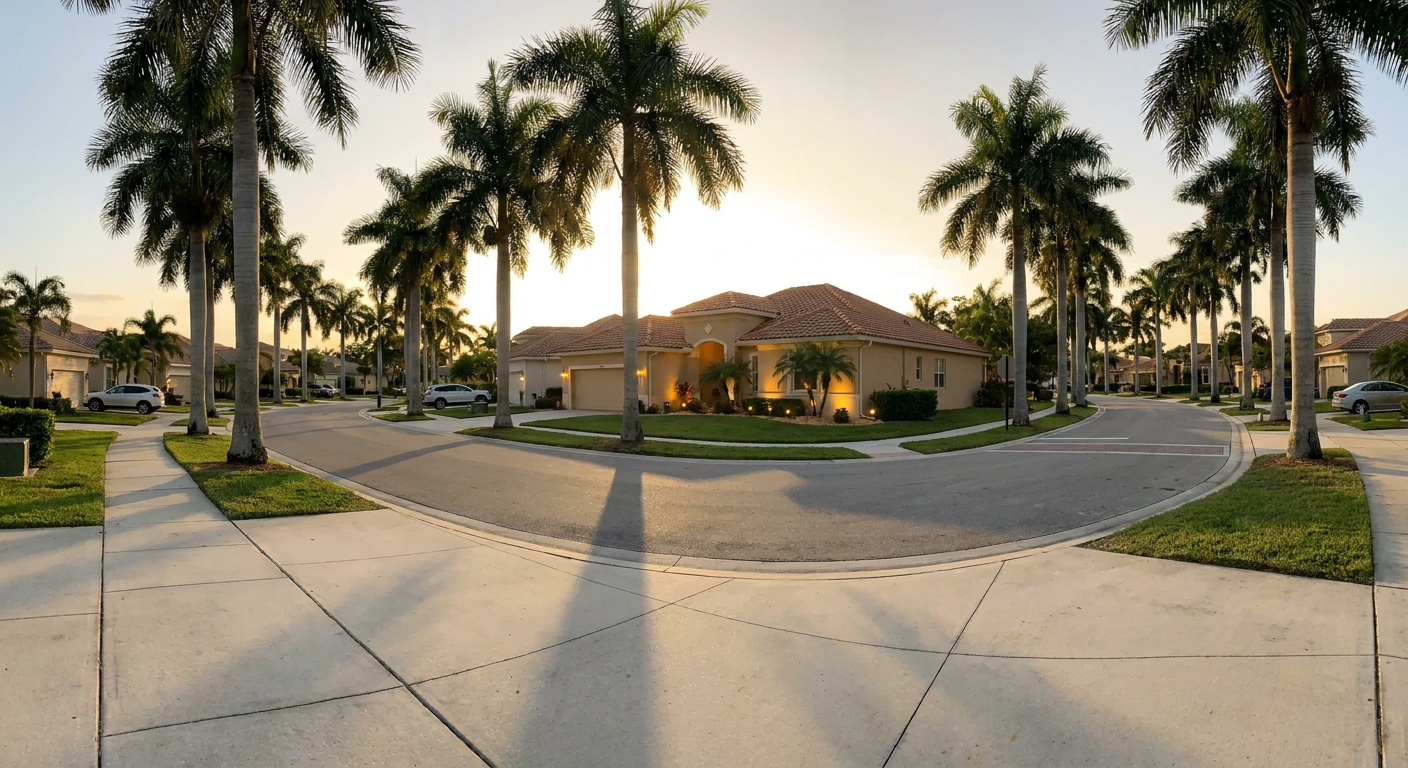
Palm Beach County, including the Palm Springs and Lake Worth areas, offers a combination of natural surroundings, manageable climate, and structured distance from most men’s home environments that is difficult to replicate elsewhere in Florida. For out-of-state clients specifically, treatment in Palm Beach County offers the added advantage of complete social separation, removing the possibility of unannounced contact from people connected to prior using. A 2017 study in the Journal of Addictive Behaviors found that patients treated more than 200 miles from home had statistically significant improvements in treatment completion and 6-month outcomes. The destination setting is not a luxury feature. It is part of the clinical rationale.
What to expect in the first 30 days of men’s rehab
SAMHSA’s Treatment Episode Data Set identifies the first 30 days of residential treatment as the period with the highest dropout risk and the highest therapeutic leverage. Men who stay engaged through day 30 are dramatically more likely to complete the full program. Knowing what to expect makes staying through the discomfort more achievable.
The first week centers on medical stabilization and clinical assessment. If detox is required, it happens during this phase under medical supervision. Days 8 through 14 introduce structured therapy: individual sessions, group therapy, and the beginning of peer community formation. Most men report that the second week is emotionally harder than the first because the substances have cleared and the underlying conditions surface. That discomfort is not a sign that something is wrong. It is the process working.
By week three, a clinical picture emerges. Your care team has enough information to identify co-occurring conditions, adjust medication if needed, and deepen the therapeutic work. Peer relationships have started to form, which is where the accountability research becomes personally relevant. By day 30, most men report a shift: not resolution, but direction. The chaos has settled enough to see what the work is actually about.
If you’re considering treatment options in the Lake Worth area, understanding this arc of early recovery helps you ask the right questions about how a facility structures those first four weeks.
The one action to take today: call a facility’s admissions line and request a benefits verification. It costs nothing, takes under 30 minutes, and tells you immediately what your financial picture looks like. Everything else follows from that call.
Common mistakes men make when choosing a rehab program
SAMHSA’s 2021 Treatment Episode Data Set found that approximately 42 percent of men who enter residential treatment leave before completing the program. Mismatched program selection is one of the primary drivers of early dropout.
Choosing based on amenities over clinical credentials is the most common mistake. A facility with a pool, gourmet meals, and a beautiful campus is not a substitute for licensed clinicians, evidence-based therapy, and proper accreditation. Amenities support engagement. They do not produce recovery on their own.
Skipping detox because withdrawal feels manageable is dangerous. Alcohol and benzodiazepine withdrawal can become medically life-threatening without warning. Men who attempt to white-knuckle through withdrawal before entering treatment frequently arrive at residential programs in worse neurological shape than necessary, which delays the start of meaningful therapeutic work.
Choosing a program too close to home undermines one of residential treatment’s strongest advantages: geographic separation from triggers and social networks. Proximity makes early-stage dropout easier and increases the likelihood of contact with people and places associated with using.
Underestimating the length of treatment needed is a mistake with measurable consequences. NIDA’s research is clear that treatment episodes of fewer than 90 days produce significantly lower long-term sobriety rates than longer stays. Negotiating your way into the shortest program available based on schedule or cost is negotiating against your own outcome.
Failing to verify dual-diagnosis capability leaves the most common relapse driver unaddressed. If a facility cannot tell you specifically how co-occurring mental health conditions are treated within the residential program, assume they are not treated adequately.
Frequently asked questions
Is a men’s-only rehab more effective than a mixed-gender program?
For most men, yes. Research published in the Journal of Substance Abuse Treatment found that men in single-gender treatment settings had higher completion rates and stronger therapeutic outcomes compared to mixed-gender programs. The clinical reason is straightforward: men in single-gender groups are more likely to be honest about shame, vulnerability, and the specifics of their use, which is the material that therapy works with.
How long does men’s residential rehab in south florida typically last?
Programs run 30, 60, or 90 days for residential treatment, followed by a step-down to PHP or IOP. NIDA identifies 90 days as the minimum duration associated with sustained behavior change for moderate-to-severe addiction. Shorter stays can be appropriate for specific situations, but the decision should be made by a clinical team based on assessment, not driven by schedule or cost preference.
Will my PPO insurance cover treatment at a south florida facility?
Many out-of-network commercial PPO plans cover a significant portion of residential treatment costs, often 60 to 80 percent after the deductible. Coverage depends on your specific plan. The fastest way to know is to call the member services number on your insurance card and ask about out-of-network behavioral health benefits. Most accredited facilities will conduct a free benefits verification on your behalf before you commit to anything.
What happens if I need mental health treatment alongside addiction treatment?
A genuine dual-diagnosis program addresses both simultaneously within the same residential setting. That means a licensed psychiatrist conducts your intake assessment, psychiatric care is available on-site throughout your stay, and your therapy schedule integrates trauma-informed modalities alongside addiction treatment. Treating addiction without addressing co-occurring conditions is the most predictable path to relapse.
Can men from out of state enroll in a south florida rehab program?
Yes, and the research supports it. Studies show that traveling for treatment, particularly more than 200 miles from home, improves treatment completion and 6-month sobriety outcomes by removing geographic and social triggers. Most South Florida residential programs routinely admit out-of-state clients and can assist with travel coordination and insurance verification before arrival.
What should I do if a family member refuses to go to rehab?
Start by verifying insurance benefits and identifying accredited programs that offer professional intervention support. Many facilities have licensed interventionists on staff or can provide referrals. The goal is to reduce the logistical barriers so that when your family member is ready, or reaches a crisis point that creates willingness, you can move quickly. Preparation is not pressure. It is readiness.