


Prescription drug addiction is one of the most prevalent and clinically complex substance use challenges in South Florida, and Palm Beach County sits at the center of it. If you’re trying to understand your options for prescription drug addiction treatment in Palm Beach County, Florida, this guide walks you through everything that actually matters: the levels of care available, what to look for in a quality program, how insurance works, and what questions to ask before you commit.
What prescription drug addiction looks like in palm beach county
According to the Florida Department of Health, opioid-involved overdose deaths in Florida exceeded 7,500 in a single recent year, with Palm Beach County consistently ranking among the counties with the highest overdose mortality rates in the state. SAMHSA’s 2023 National Survey on Drug Use and Health found that approximately 3.8 million Americans reported misusing prescription opioids in the past year alone, and that figure doesn’t capture the full scope of benzodiazepine and stimulant misuse happening simultaneously.
What this means in practice: if you’re in Palm Beach County and struggling with a prescription drug, you’re navigating a crisis that local systems are specifically designed to address. The region has seen significant investment in specialized treatment infrastructure precisely because the problem is local and acute.
The first concrete step is understanding where you fall on the clinical spectrum. Dependence means your body has adapted to the drug. Addiction means compulsive use persists despite clear consequences. The Diagnostic and Statistical Manual of Mental Disorders (DSM-5) uses an 11-criterion framework to distinguish mild, moderate, and severe substance use disorder. Knowing which category applies to your situation determines which level of care you actually need.
Why prescription drug addiction requires specialized treatment
A 2022 study published in the New England Journal of Medicine examined outcomes across more than 2,400 patients with opioid use disorder and found that individuals who had been prescribed opioids before developing addiction showed significantly more entrenched tolerance patterns compared to those whose use began illicitly. The mechanism is straightforward: when a drug enters your life through a prescription, the brain integrates it into normal functioning across a longer runway, often without the social alarm bells that street drug use triggers.
Prescription drug addiction is not simply a willpower issue or a lifestyle problem. The brain’s reward and regulation pathways have been physically reshaped by a substance that was, at some point, medically sanctioned. That history makes denial more common, shame more complicated, and withdrawal more medically risky.
On the withdrawal risk specifically: benzodiazepines and opioids carry life-threatening withdrawal profiles when stopped abruptly. Benzodiazepine withdrawal can cause seizures and cardiac events. Opioid withdrawal, while rarely fatal on its own, causes severe physical distress that drives relapse within hours if unmanaged. The single most important takeaway from this section is this: do not attempt detox without medical supervision. It is not a question of willpower; it is a question of safety.
The most commonly misused prescription drugs (and why each matters)
Opioids, including OxyContin, Vicodin, and hydrocodone, are the largest driver of prescription drug overdose deaths in Palm Beach County. According to the CDC’s 2023 overdose surveillance data, prescription opioids were involved in roughly 24% of all opioid overdose deaths nationally. Withdrawal from opioids typically begins within 12 to 24 hours of the last dose and peaks between 48 and 72 hours, producing intense physical symptoms that make unassisted detox dangerous and nearly impossible to complete.
Benzodiazepines, including Xanax, Klonopin, and Valium, carry the highest medical risk during withdrawal of any prescription drug class. A 2021 analysis in the journal Addiction found that abrupt benzodiazepine cessation after prolonged use produces seizure risk in a meaningful subset of patients, particularly those who have been on high doses for more than several months. If benzo use applies to your situation, understanding your options for benzo-specific care before anything else is the right move.
Prescription stimulants, including Adderall and Ritalin, carry a different risk profile: withdrawal is rarely medically dangerous, but the psychological crash, which includes profound depression, fatigue, and cognitive impairment, creates high relapse vulnerability in the first two weeks. NIDA’s research on stimulant use disorder highlights that co-occurring ADHD, the original reason for the prescription in many cases, requires simultaneous treatment or recovery becomes nearly impossible to sustain.
Your treatment options in palm beach county
The American Society of Addiction Medicine (ASAM) published updated level-of-care criteria in 2023 that define the full continuum of addiction treatment: medical detox, residential inpatient, partial hospitalization (PHP), intensive outpatient (IOP), and standard outpatient. Where you start on that continuum depends on three factors: the severity of your physical dependence, the presence of co-occurring mental health conditions, and your prior treatment history.
The ASAM criteria aren’t abstract; they’re a practical self-assessment tool. If you’ve been using a prescription drug daily for more than a few months, have a history of withdrawal complications, or have relapsed after outpatient treatment before, the evidence consistently points toward starting at a higher level of care.
Medical detox: the necessary first step
Medical detox provides 24/7 monitoring and medication-assisted management of withdrawal, typically running five to ten days depending on the substance and the severity of dependence. A SAMHSA report on medically supervised withdrawal found that patients who completed supervised detox were significantly more likely to enter and complete subsequent treatment compared to those who attempted withdrawal independently.
Detox is not treatment. It is the doorway to treatment, and confusing the two is one of the most common mistakes people make when evaluating programs. Completing detox without transitioning into a structured treatment program leaves the underlying behavioral, psychological, and neurological drivers of addiction completely unaddressed. Before committing to any program, confirm that it offers on-site medical detox with licensed clinical staff, not just monitored withdrawal in a residential setting.
Residential inpatient treatment
Residential treatment removes you from the environment that sustains your use, placing you in a 24-hour structured setting for typically 30 to 90 days. NIDA’s Principles of Drug Addiction Treatment, now in its third edition, states clearly that treatment episodes shorter than 90 days show limited effectiveness for opioid and sedative addiction, and that longer stays produce meaningfully better outcomes.
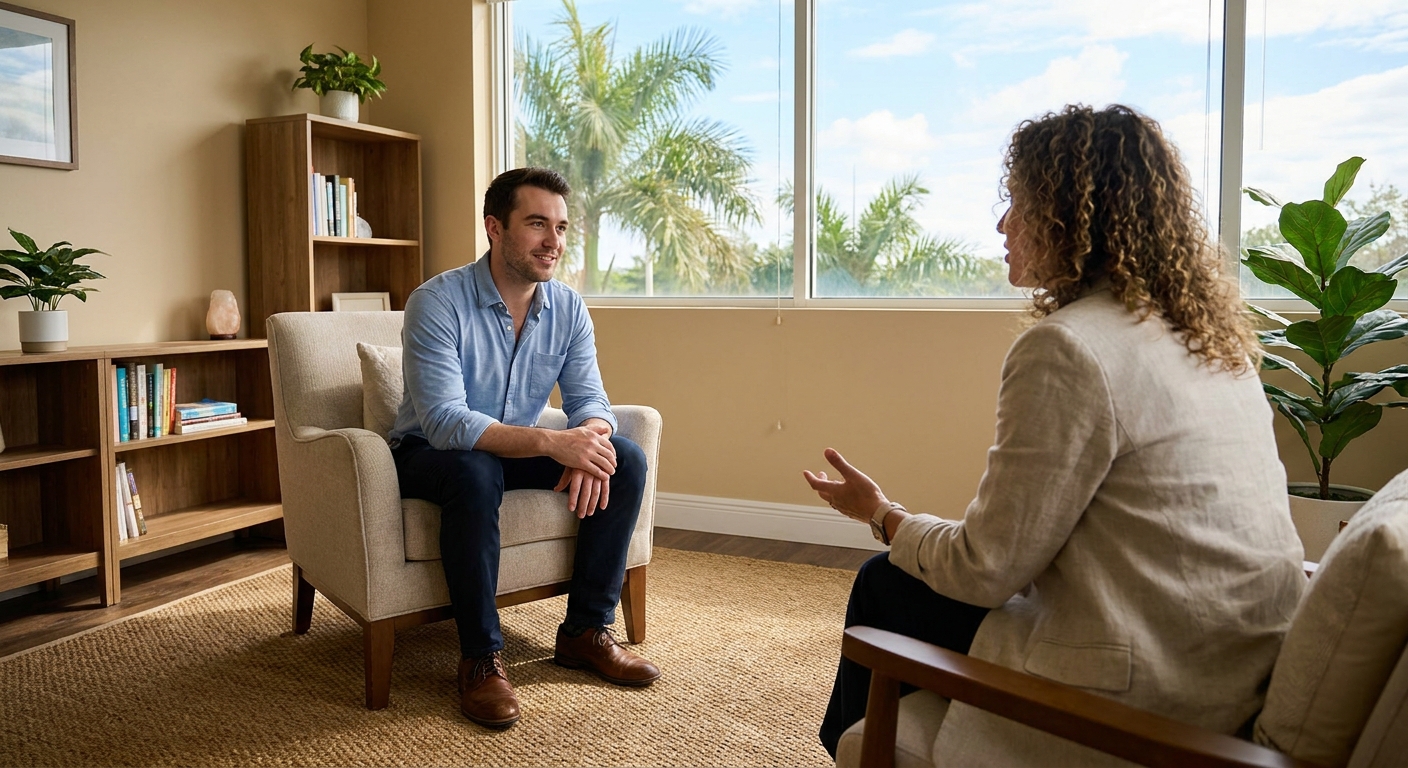
A quality residential program in Palm Beach County will offer dual diagnosis capability, individualized treatment planning, and evidence-based therapies. CBT (cognitive behavioral therapy) addresses the thought patterns that drive use. DBT (dialectical behavior therapy) builds distress tolerance. EMDR (eye movement desensitization and reprocessing) processes underlying trauma. Trauma-informed care is not a bonus feature; for many men with prescription drug addiction, unresolved trauma is the root system the drug grew from.
Before enrolling in any residential program, ask for their average length-of-stay data and their dual diagnosis outcomes specifically.
Partial hospitalization and intensive outpatient programs
PHP typically runs five to six hours per day, five days per week. IOP runs roughly three hours per day, three days per week. A 2020 study in the Journal of Substance Abuse Treatment found that PHP produced outcomes comparable to residential treatment for patients with stable home environments and strong social support, but that outcomes dropped significantly when home stability was absent.
The honest evaluation here: PHP and IOP work when your home is genuinely safe and supportive. If the environment where your use happened is the same environment you’ll return to each night, the step-down levels of care are working against the recovery, not for it. Be honest about home stability before choosing PHP or IOP over residential.
Co-occurring mental health conditions and why they can’t be ignored
SAMHSA’s 2023 National Survey on Drug Use and Health found that approximately 50% of people with a substance use disorder also meet criteria for at least one co-occurring mental health condition. For prescription drug users specifically, that number skews higher: anxiety disorders, depression, ADHD, and PTSD are frequently the conditions that made the prescription feel necessary in the first place.
Treating only the addiction without addressing the underlying mental health condition is the primary mechanism behind many relapses. The drug was managing something. Without addressing what that something is, the pull back to the drug remains. If you’re researching what a complete opioid recovery plan looks like, dual diagnosis integration is a non-negotiable feature to evaluate.
Integrated dual diagnosis treatment means psychiatry, individual therapy, and medication management happen within the same program, not referred out to a separate provider weeks later. Ask any program directly: does psychiatric assessment happen on-site, and does psychiatric care continue throughout the residential stay?
What to look for in a palm beach county prescription drug rehab
The Joint Commission and CARF (Commission on Accreditation of Rehabilitation Facilities) accreditation are the baseline quality signals to verify first. Accreditation means a program has been externally reviewed against defined clinical standards; the absence of it is a red flag worth taking seriously.
Beyond accreditation, evaluate staff credentials. A quality program employs board-certified addiction psychiatrists and licensed therapists, not just counselors with limited clinical scope. Individualized treatment planning means your plan is built around your specific history, substances, trauma, and co-occurring conditions, not a standard 30-day module everyone completes identically.
Aftercare and continuing care planning is not an afterthought. Request a copy of any program’s treatment philosophy document and ask specifically how it addresses dual diagnosis before you schedule a tour.
Gender-responsive care: why environment matters for men
A 2018 study published in the Journal of Substance Abuse Treatment analyzed outcomes across 1,300 participants and found that men in gender-specific treatment settings reported higher engagement levels, lower shame-based barriers to disclosure, and better program completion rates compared to men in co-ed settings. The mechanism isn’t complicated: co-ed environments introduce social dynamics that fragment focus during early recovery, particularly around vulnerability and emotional disclosure, two things that are non-negotiable in good therapy.
A male-only program with a structured, serene environment is not a preference or an amenity. It’s a clinical choice grounded in evidence. Ask any program whether group therapy and the peer community are male-only, or mixed.
How insurance and private pay work for rehab in palm beach county
The Mental Health Parity and Addiction Equity Act (MHPAEA), enacted in 2008 and strengthened through subsequent regulatory updates, requires commercial PPO insurance plans to cover substance use disorder treatment at parity with medical and surgical benefits. In practice, this means your plan cannot impose more restrictive limits on rehab coverage than it imposes on other medical care.
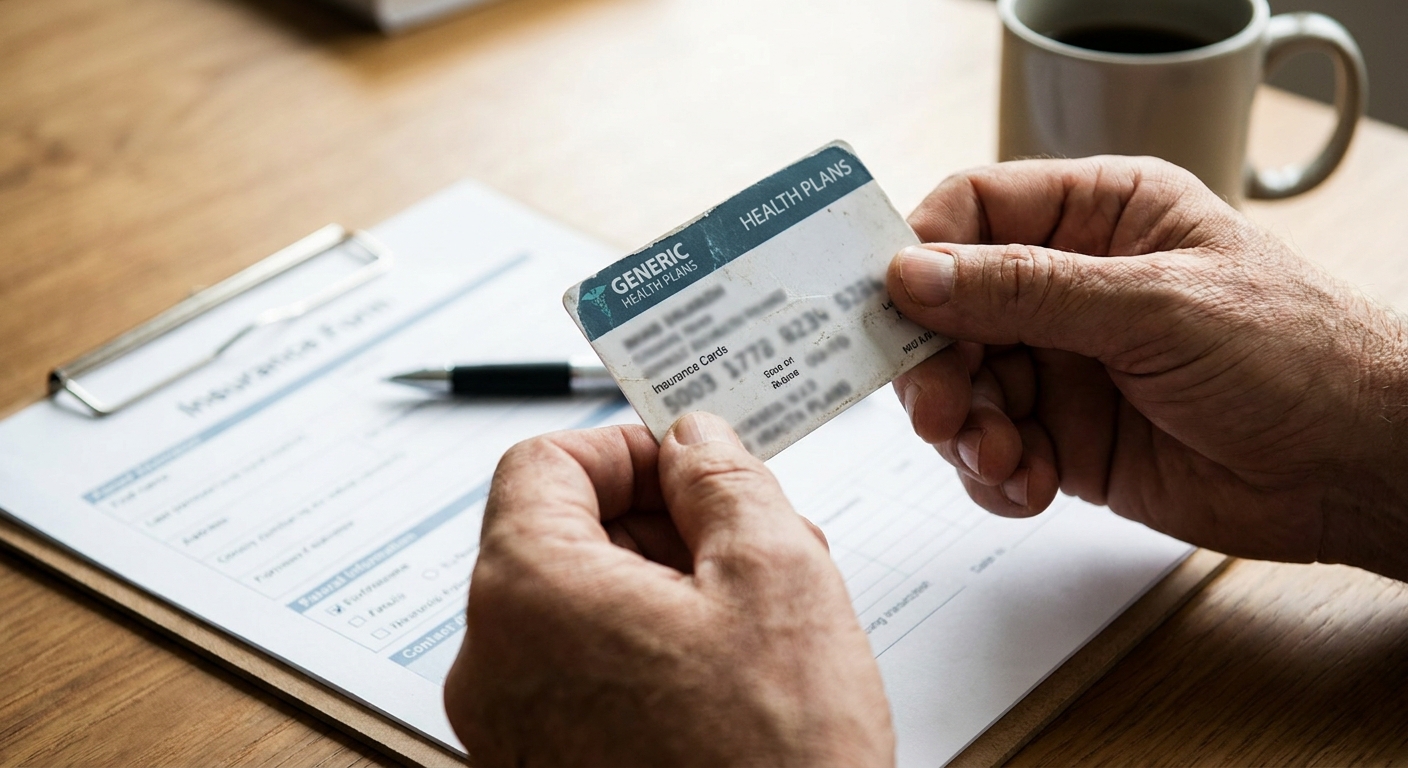
Out-of-network benefits are how many quality private programs operate. Your PPO plan has an out-of-network deductible and reimbursement rate built into it; using that benefit often means the insurer reimburses a percentage of treatment costs directly to you or the facility after the deductible is met. The concrete action here is straightforward: call the member services number on your insurance card this week and ask specifically about out-of-network residential substance use disorder benefits. That’s one call, not a commitment to anything.
What happens after rehab: aftercare and relapse prevention in palm beach county
A 2021 study from McLean Hospital found that roughly 40 to 60% of people relapse within the first year after leaving residential treatment, and that the highest-risk window is the first 90 days post-discharge. The mechanism is well-established: the structure, accountability, and peer support of residential life disappears on discharge day, and the brain, still in early recovery, faces the same environmental triggers it always faced.
Aftercare components that reduce that risk include sober living, a structured step-down to outpatient, alumni programs, and continuing care planning that begins before discharge, not after. Palm Beach County has active AA, NA, and SMART Recovery communities across Delray Beach, Lake Worth, and West Palm Beach. For men whose prescription drug use intersected with alcohol use, understanding the continuum of care for alcohol-related treatment is also worth exploring.
Before discharge from any program, confirm that a written continuing care plan exists and includes at least 90 days of structured support. That document should name specific resources, appointments, and contacts, not just general recommendations.
Frequently asked questions
How long does prescription drug rehab in palm beach county typically take?
Length of stay depends on the substance, severity of dependence, and the presence of co-occurring conditions. NIDA’s clinical guidance recommends a minimum of 90 days for opioid and benzodiazepine addiction to produce meaningful, lasting outcomes. Shorter stays are appropriate for step-down levels of care like PHP or IOP, but not as a starting point for moderate to severe prescription drug addiction.
Is medical detox always required before entering residential treatment?
For opioid and benzodiazepine addiction, yes. Both drug classes carry medically significant withdrawal risks that require clinical supervision. Stimulant detox carries lower medical risk but still benefits from monitored support due to the psychological intensity of withdrawal. Any quality residential program will either offer on-site detox or coordinate a direct transfer from a detox facility to residential care.
What does a dual diagnosis program actually look like in practice?
A genuine dual diagnosis program employs psychiatrists, not just therapists, and provides psychiatric assessment and ongoing medication management within the same facility throughout your treatment stay. Conditions like depression, anxiety, ADHD, and PTSD are treated concurrently with the addiction, not sequentially. If a program describes dual diagnosis as an “assessment at intake and a referral if needed,” that is not integrated treatment.
How do I verify my insurance covers prescription drug rehab?
Call the member services number on the back of your insurance card and ask: “What are my out-of-network benefits for residential substance use disorder treatment?” Ask specifically about the deductible, the reimbursement percentage after the deductible, and whether prior authorization is required. A reputable treatment program will also conduct a verification of benefits call on your behalf before or during the admissions process.
Can I go to rehab if I live outside palm beach county or out of state?
Yes. Many men who enter treatment in Palm Beach County come from out of state specifically because of the combination of clinical quality, structured environments, and the separation from the home environment where use occurred. Out-of-state clients use the same insurance verification process and the same levels of care as local clients.
What to try this week
One phone call is the highest-leverage action you can take in the next 48 to 72 hours: call for a confidential insurance verification and a clinical assessment. Not a commitment to enroll, not a final decision, just information. Knowing what your insurance covers and speaking with a clinician about which level of care fits your situation eliminates the two biggest barriers people cite when they delay getting help: cost uncertainty and not knowing where to start.
If prescription drugs have been part of a broader pattern that includes alcohol or other substances, a clinical assessment that covers alcohol-specific treatment options in the Palm Springs area is worth requesting in the same conversation. The goal this week is one call. Everything else follows from that.