


Choosing sober living in Lake Worth, Florida is one of the most consequential decisions you will make in early recovery, and most people make it without knowing what to actually look for. This guide gives you the criteria, the questions, and the red flags so that decision is grounded in evidence, not urgency.
Why location shapes recovery outcomes
A 2006 study published in the Journal of Psychoactive Drugs, tracking 300 Oxford House residents across multiple states, found that neighborhood characteristics, including proximity to recovery support services and peer density, predicted abstinence outcomes independently of individual motivation. Where you live during early recovery is not a logistical detail. It is a clinical variable.
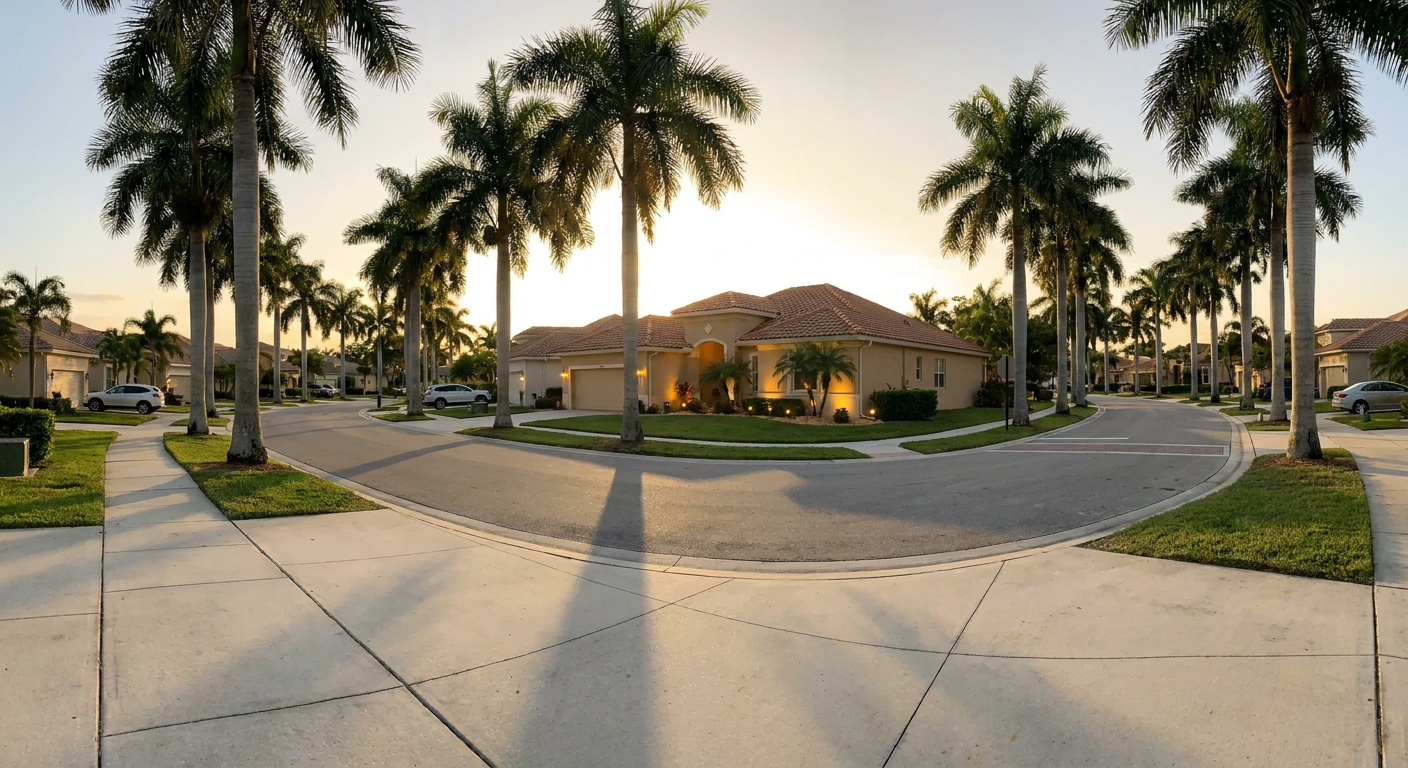
Lake Worth and the broader Palm Beach County area offer a particular convergence of factors that matter for recovery: a year-round climate that supports outdoor routine and physical activity, one of the highest concentrations of recovery support meetings and outpatient services in the Southeast United States, and a recovery community large enough to provide genuine peer connection without being so saturated that it breeds dysfunction. For men coming out of inpatient treatment, whether from within Florida or from out of state, this environment creates conditions that are genuinely harder to find elsewhere.
The practical takeaway is direct: do not treat location as a secondary factor after cost or aesthetics. Ask any home you consider how many recovery meetings are within walking or short driving distance, and what outpatient treatment options exist nearby. Those answers tell you whether the environment will actively support your recovery or simply not impede it.
What sober living actually is (and what it is not)
Sober living is structured, peer-supported residential housing designed to bridge the gap between intensive treatment and independent daily life. It is not a hospital. It is not detox. It is not inpatient rehab. And it is not simply a room to rent while you figure things out. Done correctly, sober living provides accountability, structure, and community during the period when most relapses occur.
Misunderstanding what sober living is leads to mismatched expectations, and mismatched expectations lead to early departure. Before you tour a single home, it helps to understand exactly where sober living fits in the treatment landscape.
The difference between sober living and a halfway house
The terms are often used interchangeably, but they describe meaningfully different things. According to the Substance Abuse and Mental Health Services Administration (SAMHSA), halfway houses are typically court-mandated, government-funded, and designed primarily for individuals transitioning out of the criminal justice system. Sober living homes are voluntary, privately operated, and funded through resident fees or private insurance-adjacent services.
The distinction matters before you tour because the populations, rules, and cultures of these environments differ significantly. A court-mandated halfway house and a privately operated recovery residence in Palm Beach County are not the same experience. Knowing which type you are evaluating shapes every question you ask. If you want a deeper look at how these two models compare in South Florida, that distinction becomes especially clear in the context of local regulations.
How sober living fits into the continuum of care
The American Society of Addiction Medicine (ASAM) levels of care framework places sober living at the lower end of structured residential support, typically at or below Level 3.1, following higher-intensity treatment at Levels 3.5 or 4. That sequence exists for a reason.
A 2018 study in Substance Abuse tracking 330 men who completed residential treatment found that those who moved directly to fully independent living relapsed at nearly twice the rate of those who transitioned through structured recovery housing. The mechanism is not complicated: independent living removes accountability structures before the neurological and behavioral patterns of recovery are stable. Ask any prospective sober living home how they coordinate with your current or prior treatment provider. A home with no answer to that question is a home without a clinical framework.
The research case for structured sober living
The longest-running and most cited research on recovery housing comes from the Oxford House studies conducted by William Jason at DePaul University. A 2007 study following 897 residents across four states found that men who remained in Oxford House-style structured sober living for at least one year achieved abstinence rates of approximately 80% at the two-year follow-up, compared to 54% for those who left within three months. The numbers shift dramatically based on duration of structured support.
Structure in this context is not punitive. It is protective. What structure actually looks like on a Tuesday: a scheduled wake time, a house meeting before dinner, a curfew that requires you to account for your evening, and a drug test that could happen any morning. Those constraints are not restrictions on your autonomy. They are scaffolding while the habits of sobriety are still forming. The move that works is choosing a home where structure is explicit, written down, and consistently enforced rather than selectively applied.
Key standards to look for in a lake worth sober living home
Florida has more sober living homes per capita than nearly any other state, and not all of them meet the same standards. The state’s history with patient brokering fraud, documented extensively by the Florida Attorney General and the Palm Beach Post’s investigative reporting, makes due diligence non-negotiable rather than optional. The National Alliance for Recovery Residences (NARR) has established four levels of sober living quality, and Florida’s state affiliate, the Florida Association of Recovery Residences (FARR), certifies homes that meet minimum standards for ethics, safety, and resident rights.
Certification is the baseline. Everything else builds from there.
Florida certification and licensing requirements
FARR certification means a home has been inspected and verified against standards covering physical safety, staff qualifications, resident rights, and ethical business practices. Florida Statute 397 governs substance abuse treatment and recovery services in the state, and while not all sober living homes are required to be licensed under 397, FARR certification signals voluntary accountability to an external standard.
The public FARR registry is searchable. Before you schedule a tour, verify the home’s certification status. If a home claims certification but does not appear on the registry, that discrepancy is itself a red flag. This is a thirty-second check that filters out a significant percentage of homes that should not be on your list.
Staffing, supervision, and house management
SAMHSA’s 2014 treatment improvement protocol on recovery housing explicitly identifies qualified house management as a predictor of resident outcomes. Qualified means credentialed: look for Certified Addiction Professional (CAP) or Certified Criminal Justice Addictions Professional (CCJAP) designations in Florida, or equivalent credentials. It also means available: 24/7 coverage with a clear escalation protocol for emergencies, mental health crises, and relapse events.
The question that cuts through marketing language is simple: who is on-call at 2 a.m. on a Saturday, and what are their credentials? A confident, specific answer tells you the home takes staffing seriously. A vague or deflecting answer tells you they do not.
Drug testing protocols
A 2012 study in the Journal of Substance Abuse Treatment examining 300 recovery housing residents found that regular, randomized drug testing was associated with significantly longer periods of continuous abstinence compared to self-reporting alone. The mechanism is accountability: when everyone in a house knows testing is random and observed, the social pressure to use is reduced and the motivation to stay clean is reinforced by the community standard.
A rigorous protocol involves randomized rather than scheduled testing, observed collection to prevent substitution, a broad enough panel to detect the substances most relevant to the population, and a documented chain of custody. Ask for the written drug testing policy before signing any agreement. If the policy is not in writing, it is not a policy.
House rules, structure, and curfews
A 2019 study in the American Journal of Drug and Alcohol Abuse analyzing data from 600 sober living residents found that homes with clearly written, consistently enforced rules produced better one-year abstinence outcomes than homes with informal or selectively enforced expectations. The content of the rules mattered less than their consistency.
Reasonable structure includes a curfew (typically 10 or 11 p.m. on weeknights), mandatory attendance at house meetings, requirements for active participation in outpatient programming or 12-step involvement, and defined chore responsibilities. Guest and visitor policies should be clearly written. Before committing to any home, compare their written rules document to these benchmarks. If the rules exist only verbally, consistency is unlikely.
Safety, physical environment, and amenities
Do not evaluate a home from a website photo. An in-person tour is mandatory, and what you are evaluating goes beyond aesthetics. NARR’s physical environment standards specify occupancy limits per room, functional bathroom-to-resident ratios, fire safety compliance, and basic habitability. In the Lake Worth context, you are looking at neighborhoods that range from quiet residential to more urban, and the immediate environment affects both safety and daily routine.
On a tour, check for cleanliness of shared spaces, condition of mattresses and linens, working air conditioning (non-negotiable in South Florida summers), secure storage for personal items, and a general sense of whether the space is maintained. A home that looks neglected during a scheduled tour looks worse when no one is watching.
Co-occurring mental health support: why it matters for men
According to SAMHSA’s 2022 National Survey on Drug Use and Health, 52.1% of adults with a substance use disorder also had a co-occurring mental health condition. Among men specifically, depression, anxiety, and trauma-related disorders are consistently underdiagnosed because men in active addiction are less likely to seek mental health treatment and less likely to be screened for it.
A sober living home that addresses substance use without accounting for mental health is treating half the problem. Integrated support means access to outpatient therapy and psychiatric medication management within or adjacent to the program, staff trained in trauma-informed care, and clear protocols for what happens when a resident is struggling emotionally, not just chemically. Ask the home directly: if a resident is experiencing significant depression or trauma symptoms, what is the response? The answer distinguishes homes that understand co-occurring disorders from those that treat sobriety as a purely behavioral problem.
Insurance, private pay, and what lake worth sober living costs
Quality sober living in Lake Worth and Palm Beach County typically ranges from $800 to $2,500 per month, depending on the level of structure, amenities, and whether clinical programming is integrated. The wide range reflects a genuinely wide variation in quality. Lower cost does not reliably signal lower quality, but it does signal a different service model.
Florida’s 2017 patient brokering law (HB 807) made it illegal for recovery residences to receive referral fees from treatment providers, or vice versa. The law exists because the practice was widespread and directly harmed patients. Ask explicitly whether the home receives referral fees from any treatment provider. A reputable home answers that question without hesitation.
What commercial PPO insurance typically covers
Sober living room and board is generally not covered by commercial insurance, including out-of-network PPO plans. What PPO insurance often does cover, sometimes at meaningful out-of-network benefit levels, is the clinical programming that runs alongside sober living: intensive outpatient (IOP), individual therapy, psychiatric services, and medication-assisted treatment where applicable. Understanding what your PPO benefits cover in a recovery residence setting is worth a direct call to your insurer before you move in, not after.
When you call, ask specifically about out-of-network IOP benefits, your deductible status, and whether pre-authorization is required for outpatient behavioral health services. Get a reference number for the call. Financial surprises in early recovery are destabilizing, and they are avoidable with one phone call.
Questions to ask about financial policies
Before signing any financial agreement, get clarity on the deposit amount and whether it is refundable, the payment schedule, what happens to prepaid fees if you leave voluntarily or are asked to leave, and whether there are fees beyond the stated weekly or monthly rate. Florida’s history of predatory financial practices in the recovery industry makes this consumer protection, not skepticism.
Read the entire financial agreement before signing it. If anything is unclear, ask a family member or an attorney to review it. A reputable home will not pressure you to sign immediately.
Red flags to walk away from
Florida’s recovery housing market has been documented by the Florida Attorney General, the U.S. Department of Justice, and investigative journalists as a setting where fraud and patient exploitation have been widespread. The red flags are consistent enough to name directly.
Walk away from any home that contacts you with an unsolicited transportation offer. Walk away from homes that pressure you to use your insurance before explaining what services it would actually cover. Walk away from any home without FARR certification, without written rules, without a clear answer about who is on staff overnight, or from any representative who guarantees a recovery outcome. Legitimate sober living homes do not guarantee sobriety. They provide structure and support. The difference is significant.
Trust your instincts on a tour. If something feels off, it probably is.
Questions to ask on a sober living tour in lake worth
A 2020 study in Psychiatric Services examining 240 families navigating substance use treatment found that families who came prepared with specific questions were significantly more likely to place their loved one in a setting that matched their clinical needs. Preparation is not overcaution. It is outcome-relevant.
Bring these questions to every tour: Is this home FARR-certified, and can you show me your certification? Who is on staff overnight, and what are their credentials? What does your drug testing protocol look like in writing? How do you handle a resident who relapses? What does a typical weekday look like, hour by hour, for a new resident? How do you support residents who have co-occurring mental health conditions? What outpatient treatment do residents participate in, and how is that coordinated? What is your average length of stay, and what do alumni outcomes look like? Can I speak with a current resident, one you have not specifically selected for this conversation? What happens to my fees if I need to leave?
The answers will differentiate homes more clearly than any website or referral.
The peer community factor: why it matters more than the building
William Jason’s Oxford House research, spanning more than 20 years and thousands of participants, consistently identifies peer community as the strongest predictor of long-term recovery outcomes in residential settings, stronger than amenities, location, or program structure alone. The people you live with during early recovery shape your habits, your identity, and your relationship to sobriety in ways that persist after you leave.
A healthy peer community in a men’s sober living home has specific characteristics: men at various stages of recovery, active involvement in service and step work, a culture where accountability is practiced without shame, and genuine social connection rather than enforced proximity. Ask to speak with a current resident, not one selected by staff, during your tour. That conversation will tell you more about the actual culture of a home than anything a program director says.
The building is a container. The community is the treatment. Men’s sober living in the West Palm Beach area follows the same principle: what surrounds you matters as much as where you sleep.
What the first 90 days in sober living should look like
NIDA’s research on relapse rates identifies the first 90 days following treatment completion as the highest-risk period for relapse, with rates ranging from 40% to 60% for alcohol and opioid use disorders during this window. That is not a discouraging statistic. It is a clinical reality that good sober living programs are explicitly designed around.
A well-structured first 90 days in a Lake Worth sober living program includes daily accountability through house check-ins and drug testing, active participation in intensive outpatient programming (IOP) at minimum three days per week, step work or an equivalent structured recovery framework, regular contact with a sponsor or recovery mentor, and scheduled check-ins with house management. When integrated sober living is connected directly to clinical programming, the transition from inpatient to residential support is smoother because the clinical team and the house staff are working from the same plan.
Ask any home you visit to walk you through what a new resident’s first week actually looks like, scheduled hour by hour. A home with a clear, specific answer to that question has thought carefully about early recovery. A home that gives a vague answer has not.
What to try this week
The single task that matters right now: identify three FARR-certified sober living homes in the Lake Worth and Palm Beach County area, schedule one in-person tour, and bring the question list from this article. Everything else follows from that tour. The certification check takes thirty seconds on the FARR public registry. The tour takes a few hours. The decision you make after it shapes the next year of your life.
Frequently asked questions
Is sober living in lake worth covered by insurance?
Sober living room and board is not typically covered by health insurance, including PPO plans. However, clinical services that run alongside sober living, including intensive outpatient treatment, individual therapy, and psychiatric services, are often covered at out-of-network PPO benefit levels. Call your insurer directly before moving in to clarify your specific coverage.
How long do most men stay in sober living in lake worth?
Clinical research, including the Oxford House longitudinal studies, consistently shows better abstinence outcomes for residents who stay at least 90 days, with significantly better outcomes for those who stay six months or longer. The first 90 days are the highest-risk period for relapse, so duration of structured support directly affects outcomes.
What is FARR certification and why does it matter?
FARR stands for the Florida Association of Recovery Residences. It is Florida’s state affiliate of the National Alliance for Recovery Residences (NARR) and certifies recovery residences that meet minimum standards for physical safety, staff qualifications, resident rights, and ethical operations. FARR certification is verifiable on a public registry and represents the baseline standard for any home worth considering.
Can family members visit a sober living home in lake worth?
Most quality sober living homes allow family visits, but with structured policies around timing, frequency, and guest behavior to protect the recovery environment. Ask about the specific guest and visitor policy during your tour. Some homes also offer family involvement in programming or family therapy coordination as part of an integrated clinical model.
What is the difference between sober living and inpatient treatment?
Inpatient or residential treatment is a higher level of care where clinical services are delivered on-site in a controlled medical or therapeutic environment, typically at ASAM Levels 3.5 or 4. Sober living follows inpatient treatment and provides structured housing with peer accountability while the resident re-engages with daily responsibilities like work, outpatient therapy, and independent decision-making. Sober living is not a substitute for inpatient treatment.
How do I know if a sober living home in lake worth is legitimate?
Start with the FARR public registry to verify certification. On a tour, ask for written documentation of house rules, drug testing policies, and financial agreements. Ask who is on staff overnight and request their credentials. Ask to speak with a current resident without staff present. Legitimate homes answer these questions directly and confidently. Homes that deflect, pressure you to sign quickly, or cannot produce written policies warrant serious skepticism.