

The drinking was never the part that scared you most. What scared you was what came after he stopped: the nights he could not sleep, the way he snapped at everyone in the house, the flat, faraway look in his eyes, and then, a few days later, the bottle back on the counter. If you have watched that cycle more than once, you may already suspect that the alcohol or the pills were covering something else. That suspicion is usually what sends a parent to a search bar late at night with one question: which type of therapy is commonly used in treating dual diagnosis, when your son is fighting two battles at the same time?
No single therapy carries this alone. Cognitive behavioral therapy (CBT) is the most common foundation. It often works alongside dialectical behavior therapy (DBT), EMDR for trauma, group therapy, family work, and medication assisted treatment (MAT) when it fits. The specific method matters less than one principle: one team treats both conditions together, in one plan. This page explains what each therapy looks like for a man in treatment and how The Palms Recovery, a male-only program in Palm Springs, Florida, combines them across detox, PHP, IOP, and outpatient care.
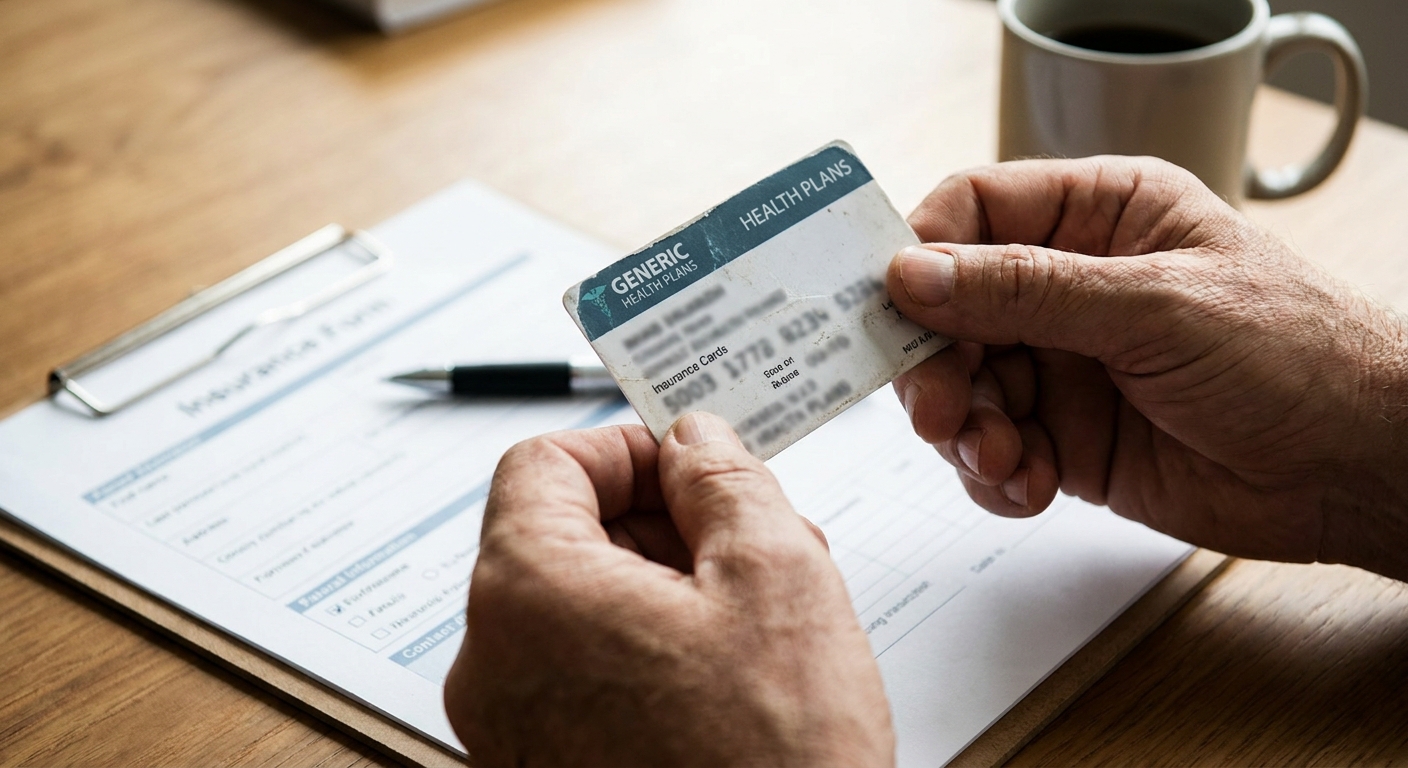
You are probably tired, and you may have been let down before. You do not need to have this figured out tonight. The Palms Recovery works with many major insurance plans as well as private pay, and you can call our 24/7 confidential support line to verify your son’s specific plan. The team checks your son’s specific benefits before any decision is made, with no obligation.
What Is Dual Diagnosis, and Why Won’t Treating Only the Drinking Work?
Dual diagnosis means a person has a substance use disorder and a mental health condition at the same time. Treating only one may not hold, because each condition can feed the other.
The National Library of Medicine’s MedlinePlus defines dual diagnosis as having both a mental disorder and an alcohol or drug problem. Clinicians also call it “co-occurring disorders.” It is far more common than most families realize. The National Institute on Drug Abuse reports that about half of people who experience a mental illness during their lives will also experience a substance use disorder, and the reverse is also true. Your son is not a rare case, and recovery is possible when both conditions are named and treated, though individual responses to treatment vary.
The hard part is telling a true co-occurring disorder apart from symptoms the substance itself may be causing. Alcohol is a depressant, and heavy drinking can produce low mood, poor sleep, and hopelessness that look exactly like depression. Stimulants such as cocaine or methamphetamine can create anxiety and paranoia. Some of those symptoms fade after a stretch of sustained sobriety. A true co-occurring condition often shows up in one of two ways: the symptoms were there before the substance use began, or they stay well after he has stopped using. Getting this right matters. If the team misses a real depression, he may face increased risk of relapse. If they treat a temporary, substance-driven symptom as permanent, he may carry a label and a medication he never needed.
A careful dual diagnosis assessment, the kind The Palms Recovery’s clinical team completes at intake in Palm Springs, FL, looks at the timeline. When did the anxiety start? Were the dark moods there in high school, before the first drink? What happened during any stretch when he stayed sober? Is there family history of depression or bipolar disorder? Is there trauma he has never talked about? Some answers are not clear on day one. A good team keeps watching and adjusts as the picture sharpens.
So why treat both at once? Picture the cycle you have already lived through. Anxiety rises, he drinks to quiet it, the drinking may make the next morning’s anxiety worse, and he drinks again. If you treat only the drinking, untreated anxiety can become a significant relapse trigger. If you treat only the anxiety, ongoing drinking can undercut medication effectiveness and therapy progress. SAMHSA’s integrated treatment evidence review describes the alternative: the same clinicians treat both disorders at the same time, in the same program.
The Palms Recovery works with men whose substance use involves alcohol, opioids, cocaine, methamphetamine and other stimulants, benzodiazepines, prescription drugs, marijuana, inhalants, MDMA, or more than one substance at once (polysubstance use). Mental health conditions that commonly co-occur with substance use include:
- Depression, often hidden behind daily drinking or opioid use
- Anxiety disorders, including panic attacks that alcohol or benzodiazepines seem to “fix”
- Trauma and PTSD, from childhood, combat, violence, or loss
- Bipolar disorder, where substances get used to ride out or chase mood swings
- ADHD, sometimes self-treated with stimulants
- OCD
- Borderline personality disorder
- Grief and loss that never got worked through
Why Does Cognitive Behavioral Therapy Sit at the Center of Dual Diagnosis Care?
CBT is one of the most common foundations for dual diagnosis treatment because it targets the thoughts that may drive both the substance use and the mental health symptoms. One distorted belief can power both problems, so one skill set may help address both.
Take a thought your son may have said out loud: “I can’t handle this stress without a drink.” On the surface it sounds like it is about alcohol. Underneath sits a deeper belief: “If I feel this, something bad will happen, and I won’t be able to cope.” That same belief may fuel his anxiety. It is why a tough email from his boss can feel like an emergency, and why his chest tightens before a family dinner. CBT teaches him to catch the thought, test it against the evidence (“Have I ever actually handled stress without drinking? What happened?”), and replace it with something truer and more useful. NIDA identifies cognitive behavioral therapy among the behavioral therapies with research support for treating substance use disorders, and the same method is well established for depression and anxiety, though individual responses to CBT vary.
In The Palms Recovery’s intensive outpatient program, the same therapist hears about the craving and the panic in the same session. Picture your son describing an argument with his father that ended with him sitting in the car outside a liquor store. A split system would send the craving to a substance use counselor and the panic to a separate mental health provider weeks later. In an integrated session, the therapist walks him through the whole chain at once: the trigger, the thought (“I’m a failure, nothing I do matters”), the feeling, the urge, and the choice point where he could have done something different. The craving and the depression get treated as one story, because to him they are one story.
The outpatient setting gives CBT something a fully residential setting cannot: real homework in real life. Your son does not just talk about challenging his thoughts. He goes home, faces the same stressors, fills out a thought record when the anxiety hits, and brings it back to the next session. Over weeks, that repetition may help build new response patterns, though the pace of progress varies from person to person.
DBT: Skills for the Moment When the Craving and the Panic Hit Together
Where CBT works on the thoughts, DBT works on the moments when emotions move too fast for thinking. It is used when dual diagnosis comes with intense emotions, impulsive choices, or trauma, and it teaches concrete skills that may help whether the crisis in front of him is a craving or a panic attack.
DBT was first developed to treat borderline personality disorder. Clinicians now use it widely for people whose emotions rise fast and hit hard. At The Palms Recovery, DBT plays a central role for men with borderline personality disorder, PTSD, and severe anxiety, conditions where the urge to use often arrives in the same rush as the emotional storm. DBT is built on four skill modules:
- Mindfulness: noticing what he feels and thinks right now, without acting on it automatically
- Distress tolerance: getting through a crisis without making it worse
- Emotion regulation: understanding his emotions, lowering his vulnerability to them, and changing the ones that do not fit the facts
- Interpersonal effectiveness: asking for what he needs and saying no without blowing up or shutting down
One distress tolerance skill shows why DBT fits dual diagnosis work. It is called TIPP: Temperature (cold water on the face to slow the heart rate), Intense exercise (a short, hard burst of movement to burn off the surge), Paced breathing (slowing each exhale), and Paired muscle relaxation (tensing and releasing muscle groups while breathing out). TIPP works on the body first. It does not ask your son to think his way out of a panic attack or a craving when his brain is too flooded to think. It may change his body chemistry enough to buy him a few minutes, and a few minutes is often all a craving or a panic wave needs to start passing.
Interpersonal effectiveness matters more for men than most families expect. Many of the men we treat were raised to believe that asking for help is weakness, so they never learned how to say “I’m not okay.” The drinking or the pills became their way of saying it without words. DBT gives them actual language. In our groups, we push until the mask breaks, not to shame anyone, but because a man cannot treat a feeling he refuses to admit he has.
When Trauma, Isolation, or Brain Chemistry Is Part of the Story, What Else Does He Need?
CBT and DBT form the core, but some men need more. Three additional tools come in when the picture is more complex: medication assisted treatment to help stabilize the brain, EMDR for trauma, and group therapy for isolation. Each one works alongside CBT and DBT, not instead of them.
Medication assisted treatment comes into play when the dual diagnosis includes opioid use disorder or alcohol use disorder. MAT commonly uses FDA-approved medications such as buprenorphine or naltrexone for opioid use disorder, and naltrexone or disulfiram for alcohol use disorder. If your son also needs medication for depression, anxiety, or bipolar disorder, such as an antidepressant or a mood stabilizer, that matters too. Every medication he takes has to be reviewed together, by people who can see the whole list.
At The Palms Recovery, MAT and mental health care sit under one roof and one plan, with medical oversight from Jeffrey Bishop, MD. That closes a potentially dangerous gap. When an addiction provider and a separate psychiatrist never talk, a man can end up on combinations that interact badly, or one prescriber can undo the other’s work without knowing it. MAT is decided case by case. Not every man needs it, and individual responses to medication vary. When it fits, it may help steady him enough for the therapy to take hold.
EMDR for Trauma-Rooted Dual Diagnosis
Eye Movement Desensitization and Reprocessing (EMDR) is used when trauma sits at the root of both the substance use and the mental health condition. Think of a man who uses opioids to quiet memories of childhood abuse, or a veteran who drinks so he can sleep without seeing what he saw. Every time the memory surfaces, his body may react as if the danger is happening again, and the substance becomes the fastest way to shut that alarm off.
In EMDR, a trained therapist guides him to hold the memory in mind while following side-to-side eye movements or another form of back-and-forth stimulation, such as tapping. The memory does not disappear, but for some people it loses its emotional intensity over time. Over sessions, he may be able to think about what happened without his heart pounding and his hands reaching for something to numb it. When the trauma response begins to shift, both the PTSD symptoms and the pull toward using may have less fuel, though EMDR outcomes vary by individual.
Timing matters. EMDR asks a man to approach his worst memories, so he needs to be stable enough to do it safely. That is one reason DBT skills often come first. He learns to ride out distress before he is asked to touch its source.
Group Therapy and the Power of Peer Connection in Dual Diagnosis Recovery
Isolation is one of the most dangerous aspects of dual diagnosis. A man who drinks to stop panic attacks, or uses stimulants to manage ADHD nobody ever treated, often believes he is the only person on earth who does this. That belief keeps him silent, and silence keeps him stuck.
Group therapy may help break that belief. When your son sits in a room and hears another man describe the exact cycle he thought was his private shame, something can shift. Group is also where accountability lives. Men notice when someone is slipping, and they say so. That is brotherhood: not a slogan, but men holding each other to the standard they set for themselves.
The Palms Recovery admits men only, 18 and older, and that is a clinical choice, not just a demographic one. Many men will not talk about trauma, depression, or fear in a mixed room, and some will not talk about it in front of anyone until they see another man go first. An all-male group may help lower the guard that keeps the mental health half of a dual diagnosis hidden, which is often the half that can drive relapse.
So Which Type of Therapy Is Commonly Used in Treating Dual Diagnosis? A Team, Not a Technique
CBT is one of the therapies most commonly used, but the approach that may help is integrated treatment: several evidence-based therapies combined into one plan, delivered by one team that treats both conditions at once. At The Palms Recovery, that team includes Clinical Director Lauren Tynes, LCSW, and Mental Health Director Austin Pole, LMHC, working alongside Medical Director Jeffrey Bishop, MD. The program is owned and led by James and Victoria Lopker.
A dual diagnosis plan at The Palms Recovery is tailored to your son’s unique needs and can draw from:
- Cognitive behavioral therapy (CBT) to challenge the thoughts behind both the use and the symptoms
- Dialectical behavior therapy (DBT) for emotional regulation and distress tolerance
- EMDR for trauma that may fuel both conditions
- Individual therapy for the work he is not ready to say in a group yet
- Group therapy for connection and accountability with other men
- Family Services so the whole family can participate in healing
- Medication assisted treatment (MAT) when opioid or alcohol use disorder needs medical stabilization
- A 12-Step program for men who want that structure
- Relapse prevention and aftercare planning built around both conditions
- Mindfulness and meditation practice as part of caring for the whole man, mind and body
Integration is what turns that list into a plan. When the same clinicians see both conditions, nothing gets lost in a handoff. If your son’s anxiety spikes in week three, the person treating his cravings knows the same day. If a medication change leaves him foggy, his therapist hears about it in the next session, not a month later.
Integration also helps determine what comes first when one condition is more severe. Take a man with active suicidal thoughts and moderate drinking. His safety leads everything. If outpatient care cannot keep him safe, an honest team tells the family that plainly, even when it is not what they hoped to hear. Now take a man with severe opioid use and mild depression. Stabilizing the opioid use, often with MAT, may come first, while the team watches the depression closely. As the opioid use settles, the depression often becomes easier to see clearly, and the plan shifts. The ASAM Criteria, the framework the American Society of Addiction Medicine created for matching patients to the right level of care, looks at a person across six dimensions. One of those dimensions covers emotional, behavioral, and cognitive conditions, which means mental health is part of the placement decision, not an afterthought.
The Palms Recovery offers dual diagnosis care across these levels:
- Medically supervised detox: outpatient withdrawal management so he can get through the first days safely before therapy deepens
- Partial Hospitalization Program (PHP): the most hours of structured clinical care each week, for men who need close support while symptoms stabilize
- Intensive outpatient program (IOP): structured therapy several days a week while he lives at home and starts rebuilding his daily life
- Outpatient Program (OP): fewer hours, focused on keeping skills sharp and catching early warning signs
- Medication assisted treatment (MAT): available alongside each level when it fits his needs
- Telehealth: available, which can help keep him connected to his team when getting to the facility is hard
Men step through these levels without changing facilities or treatment teams, in a retreat-like setting designed to feel like a sanctuary rather than a clinic. A typical IOP week mixes group sessions, individual therapy, family sessions when the family is involved, and medication check-ins for men on MAT. The real work happens in between, at home and at work. The exact schedule is set at intake around his clinical needs.
Why Does It Matter That He Practices Recovery in Palm Springs, Florida?
Knowing the therapies is one piece. Where he practices them is another. Dual diagnosis recovery has to work in real life, not just inside a treatment building. The Palms Recovery is in Palm Springs, Florida, in Palm Beach County, not Palm Springs, California. Its outpatient model lets a man practice his skills in the community while clinical structure stays around him.
The Palms Recovery is based in Palm Springs, FL 33461, and has served men from Palm Springs and across South Florida since 2016. Many families searching for “dual diagnosis treatment Palm Springs” end up on pages for California programs. If your son lives in South Florida, or you want him close enough for family sessions, this is the Florida location.
The outpatient setting offers a practical advantage. His triggers and his symptoms do not wait until he leaves treatment. They show up at home, at work, and in the quiet hours when the anxiety gets loud. In IOP, he meets those moments while he still has a therapist to bring them to. He uses a DBT skill on a hard night, it works or it does not, and he talks it through in the next session. That is how skills may become habits. The Palms Recovery builds for what comes after, with aftercare planning and relapse prevention designed around both of his conditions.
You also need to trust the people you are handing your son to. The Palms Recovery is accredited by The Joint Commission, FARR accredited, licensed by the state of Florida, and LegitScript certified. Family Services is part of the work, because addiction affects the whole family. For many parents, the hardest lesson is this one: stop trying to solve his problem and start addressing your own. When a parent gets support too, the ripple effect can reach the whole household.
What Do Parents Usually Ask Before They Call?
Most families arrive with the same handful of questions, and the short answers are below. If yours is not here, the admissions team will answer it on the phone in plain language.
What is the most effective therapy for dual diagnosis?
No single therapy works on its own. When parents ask which type of therapy is commonly used in treating dual diagnosis, the honest answer is CBT as the foundation, combined with DBT, EMDR, group therapy, and sometimes MAT, depending on his specific conditions. The approach that may help most is the one built around both of his diagnoses and delivered by one team.
How do you know if he has a dual diagnosis or just substance-induced symptoms?
A clinical assessment at intake looks at the timeline: whether mental health symptoms existed before the substance use, whether they stay during sustained sobriety, and whether they fade once he stops using. Sometimes the answer takes a few weeks of observation to become clear.
Can addiction and mental health conditions be treated at the same time?
Yes. Integrated treatment addresses both at once, because an untreated condition on either side can be one of the most common reasons men experience relapse.
What does dual diagnosis treatment look like in an IOP setting?
Men attend structured therapy several days a week while living at home. They practice recovery skills in the real world between sessions and bring what happened back to their therapist and their group.
How long does dual diagnosis treatment take?
Length depends on how severe his conditions are and how he responds. Many men step down from PHP to IOP to OP over a period of months, and because the facility and treatment team stay the same at each step, the team reviews progress regularly so care matches his needs at each stage. Progress varies by individual.
Does The Palms Recovery accept insurance for dual diagnosis therapy?
The Palms Recovery works with many major insurance providers and also offers private pay options. Coverage varies by plan, so the best way to know what applies to your son is to call for a confidential, no obligation insurance check. The team verifies your son’s specific benefits during intake so you know where you stand before he starts.
What Is the First Step If You Think Your Son Has a Dual Diagnosis?
The first step is a confidential assessment that looks at both his substance use and his mental health, so the plan treats the whole man and not half of him. You can make that call for him or with him.
Before you pick up the phone, do one thing that may help. Write down the timeline as you remember it: when you first noticed the low moods, the anxiety, the anger, or the sleepless nights, and when you first noticed the drinking or drug use. Which came first? What happened during any stretch he stayed sober? That single page gives the clinical team a head start on the most important question in dual diagnosis care, because the order of those events often shapes which therapy leads his plan.
Take the first step today. Call The Palms Recovery at 844-80-PALMS to schedule a confidential assessment in Palm Springs, Florida and learn which combination of therapies may address both his substance use and his mental health in one integrated treatment plan. The call is compassionate, non-judgmental, and comes with no obligation.
Ready to Take the First Step Toward Integrated Care?
If you or someone you care about is navigating both mental health challenges and substance use, you don’t have to figure out the right treatment approach alone. The Palms Recovery in Palm Springs, FL offers evidence-based dual diagnosis care designed to address both conditions together. Reach out today to learn how integrated therapy can support your path to recovery.
- If your son is in immediate danger or talking about ending his life, call 911 or dial 988 to reach the Suicide and Crisis Lifeline.
- This article is for education and does not replace a clinical evaluation.
- Individual responses to therapy vary.
- No treatment approach guarantees specific outcomes, and recovery looks different for each person.